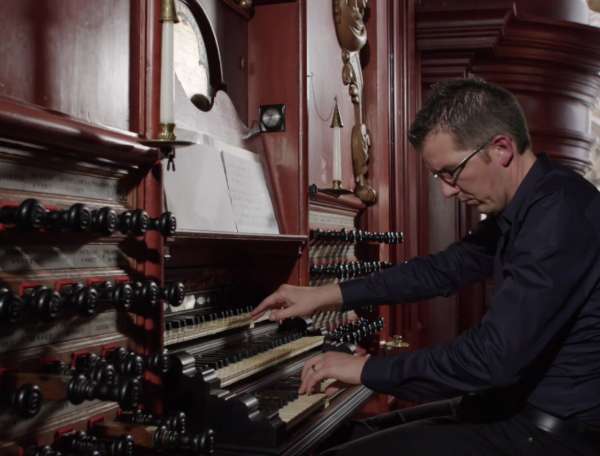
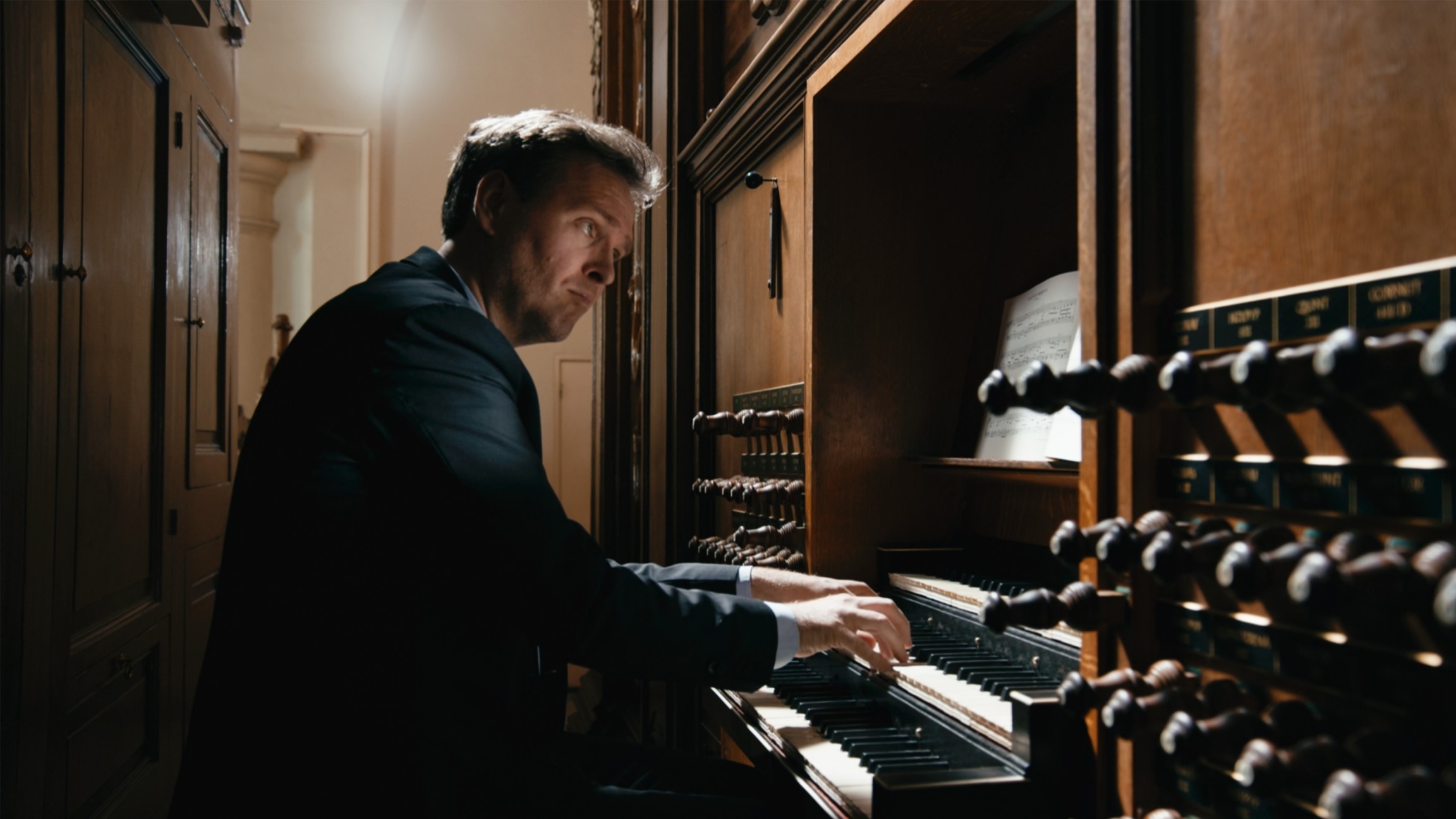
Das alte Jahr vergangen ist
BWV 1091 performed by Bart Naessens
Groote Kerk, Maassluis
Behind the music
Story
Story
Credits
Credits
Big leaps
In this organ work, Bach experiments with counterpoint and harmony
The old year has passed away, but when does the new one begin? This question is less banal than it might seem. Here and there in Europe in Bach’s day, several New Year’s Days were in use: 25 December, 6 January (Epiphany), 1 March and 25 March (Annunciation), as well as 1 January.
In Bach’s teenage years – when he was living as an orphan in Ohrdruf with his brother, who was fourteen years older – Germany introduced a calendar reform. In 1700, February 18 was the last day of the month for a single occasion, followed by March 1. This leap meant that after more than a century Protestant Germany also came into line with the calendar reform announced by Pope Gregory XIII in 1582. So not only had the old year passed away, but so had the old Julian calendar.
Das alte Jahr vergangen ist, BWV 1091, was handed down in a manuscript copied by Johann Gottfried Neumeister at the end of the eighteenth century. It was probably a work from Bach’s youth. Like many of his other chorale arrangements in the collection, it may even date back to his teenage years in Ohrdruf. Although the form is not complicated – chorale melody in the upper voice and three free accompanying voices below – it contains contrapuntal subtleties that are not immediately visible (or audible). For example, the fourth line of the chorale melody – which corresponds to the text ‘behütet hast lang Zeit und Jahr’ – is heard first in the tenor, before returning more prominently in the upper voice: a way of expressing the ‘lang Zeit’?
Coincidentally, the chorale melody of Das alte Jahr vergangen ist is just as ambiguous as the New Year’s Days and calendars in Bach’s time. In this organ version, Bach emphasises this with his harmonies. At the beginning, they indicate (with C-sharps and B-flats) the key of D minor. About halfway through, other related keys appear: A major and B-flat major. But towards the end, we unexpectedly hear the first D-sharp, in a chord (B dominant seventh) that points towards the final note E with little subtlety. And so Bach ends too: in E major. Almost as if he is leaping from 18 February to 1 March.
- BWV
- 1091
- Title
- Das alte Jahr vergangen ist
- Instrument
- organ
- Genre
- organ works
- Serie
- Neumeister Sammlung (organ)
- City
- Between the Ohrdruf and Arnstadt periods
- Special notes
- Part of the Neumeister Sammlung
Extra videos
Vocal texts
Original
Translation
Credits
-
- Release date
- 1 January 2026
-
- Recording date
- 15 May 2025
-
- Location
- Groote Kerk, Maassluis
-
- Organ
- Bart Naessens
-
- Instrument
- Rudolph Garrels, 1732
-
- Director and editor
- Onno van Ameijde
-
- Music recording
- Guido Tichelman, Pim van der Lee
-
- Music edit and mix
- Guido Tichelman
-
- Camera
- Onno van Ameijde, Rieks Soepenberg, Merijn Stojansek
-
- Assistant music recording
- Marloes Biermans
-
- Producer
- Lisanne Marlou de Kok
Discover

Help us to complete All of Bach
There are still many recordings to be made before the whole of Bach’s oeuvre is online. And we can’t complete the task without the financial support of our patrons. Please help us to complete the musical heritage of Bach, by supporting us with a donation!