Befiehl du deine Wege
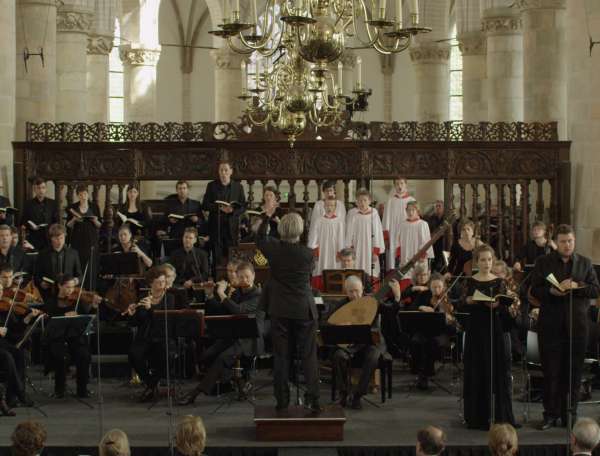
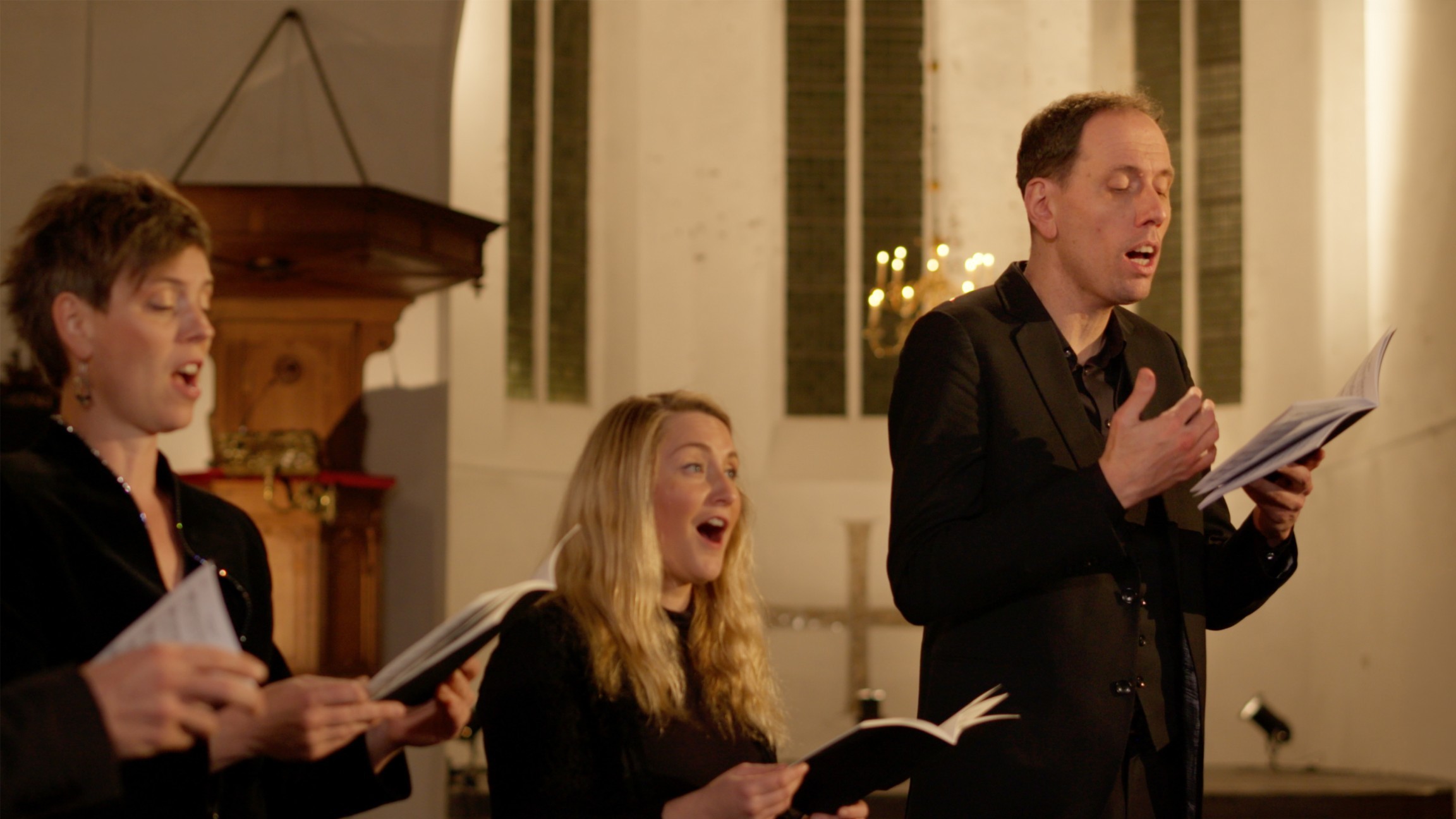
BWV 270 performed by the Netherlands Bach Society
conducted by Lionel Meunier
Geertekerk, Utrecht
Behind the music
Story
Story
Texts
Texts
Credits
Credits
One melody; lots of chorales
In this chorale, Bach shows the range of different ways he could harmonise a melody
The melody of Befiehl du deine Wege will sound immediately familiar to Bach enthusiasts. It appears four times in the St Matthew Passion alone, with different words each time. The opening of Befiehl du deine Wege, BWV 270, bears a strong resemblance to the start of the chorale ‘O Haupt voll Blut und Wunden’ from the St Matthew Passion. Not only is the melody identical, but the other voices are almost the same as well. It is only further on that the differences between the two chorales become gradually bigger.
Listening to BWV 270 and ‘O Haupt voll Blut und Wunden’ from the St Matthew Passion a couple of times after one another, it becomes clear that they form a good example of how Bach begins a four-part chorale in the same way, but gradually develops it in two different ways. And if you include more of these four-part versions in the comparison – for example, the chorale BWV 271 and ‘Wenn ich einmal soll scheiden’ from the St Matthew Passion, you get an even broader idea.
Small groups of chorales thus form clusters, as it were, in which we hear Bach developing the same harmonic and melodic ideas in different ways each time. Carl Philipp Emmanuel Bach published his father’s chorale harmonisations (the way that four-part accompaniment is added to a chorale melody – ed.) between 1765 and 1769. According to Bach’s son, his father uses ‘a very unusual manner to set up harmony in these settings and a natural flow of the inner voices and the bass’, rather than ‘stiff and pedantic rules of counterpoint’. Bach’s groups of variations of the same harmonisation show the range of different ways he could do this, even when the basic idea was the same.
Extra videos
Vocal texts
Original
1.
Befiehl du deine Wege
und was dein Herze kränkt,
der allertreusten Pflege
des, der den Himmel lenkt.
Der Wolken, Luft und Winden
gibt Wege, Lauf und Bahn,
der wird auch Wege finden,
da dein Fuß gehen kann.
6.
Hoff, o du arme Seele,
hoff und sei unverzagt!
Gott wird dich aus der Höhle,
da dich der Kummer plagt,
mit großen Gnaden rücken;
erwarte nur die Zeit,
so wirst du schon erblicken
die Sonn’ der schönsten Freud.
7.
Auf, auf, gib deinem Schmerze
und Sorgen gute Nacht!
Laß fahren, was dein Herze
betrübt und traurig macht!
Bist du doch nicht Regente,
der alles führen soll,
Gott sitzt im Regimente
und führet alles wohl.
12.
Mach End’, o Herr, mach Ende
an aller unsrer Not,
stärk unsre Füß’ und Hände
und laß bis in den Tod
uns allzeit deiner Pflege
und Treu’ empfohlen sein,
so gehen unsre Wege
gewiß zum Himmel ein.
Translation
1.
Commit your ways and worries,
your burdens and your cries;
to your most faithful Guardian,
the One who guides the skies!
He tells the winds and storm clouds
what patterns they can make;
He’ll surely also find you
a path your feet can take.
6.
Have hope, my poor spirit
have hope and stay unbowed!
From darkness God will save you,
where sorrow casts its shroud,
with great grace he will free you;
be patient for the time,
and soon you will be seeing
the sun of joy sublime.
7.
Rise up and bid your turmoil
and sorrows all depart!
Let go of all that troubles
and saddens your poor heart!
For you are not the ruler
to order or compel,
God governs past and future,
and He leads all things well.
12.
Lord, make an end, we pray you,
an end to our distress,
give strength so we may serve you
and let us, till our death
be all our days found worthy
of your most faithful care,
so that our paths will lead us
to you in heaven there.
translation © Ruth van Baak Griffioen,(2000 and 2026)
Credits
-
- Release date
- 12 March 2026
-
- Recording date
- 6 November 2025
-
- Location
- Geertekerk, Utrecht
-
- Conductor
- Lionel Meunier
-
- Soprano
- Amelia Berridge, Marta Paklar
-
- Alto
- Bernadett Nagy, Michaela Riener
-
- Tenor
- Adriaan De Koster, João Moreira
-
- Bass
- Lionel Meunier, Matthew Baker
-
- Organ
- Daniel Seeger
-
- Kirchenbass
- Ira Givol
-
- Director and editor
- Gijs Besseling
-
- Music recording
- Guido Tichelman, Pim van der Lee
-
- Music edit and mix
- Guido Tichelman
-
- Camera
- Gijs Besseling, Danny Noordanus, Jorne Tielemans, Luc Roes
-
- Lights
- Jorne Tielemans
-
- Datahandling
- Luc Roes
-
- Assistant music recording
- Marloes Biermans
-
- Producer concert
- Imke Deters
-
- Producer film
- Erik Laarman

Help us to complete All of Bach
There are still many recordings to be made before the whole of Bach’s oeuvre is online. And we can’t complete the task without the financial support of our patrons. Please help us to complete the musical heritage of Bach, by supporting us with a donation!