
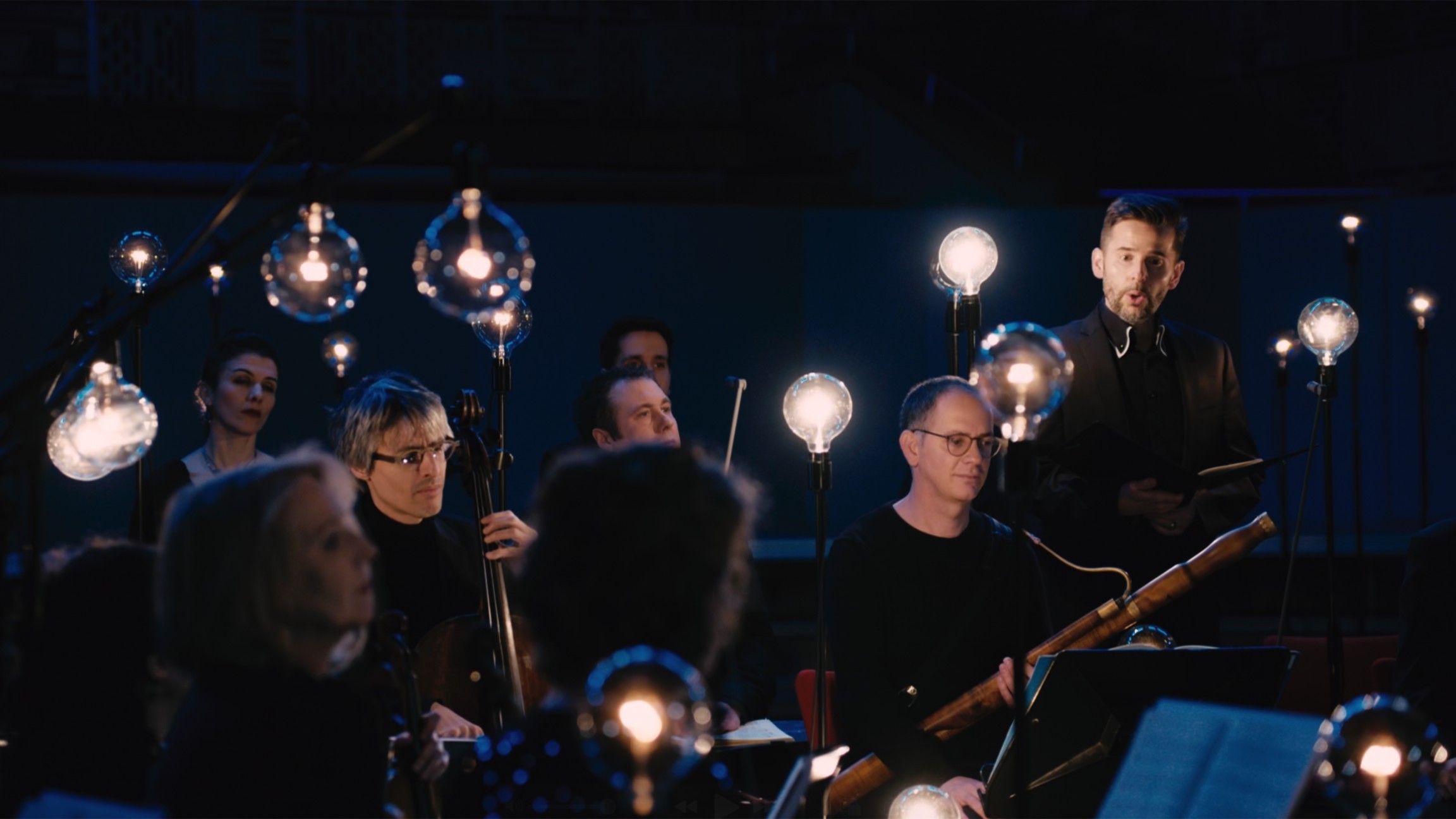
Fallt mit Danken, fallt mit Loben from Christmas Oratorio
BWV 248/4 performed by the Netherlands Bach Society
conducted by Lars Ulrik Mortensen
Heuvellaan Hilversum, Hilversum
Behind the music
Story
Story
Extra videos
Extra videos
Texts
Texts
Credits
Credits
What’s in a Name?
In the fourth cantata of the Christmas Oratorio, Jesus’s name resonates to the full
The Christmas Oratorio is one of Bach’s most famous works. Comprising six cantatas, it covers the days from Christmas morning to the Feast of Epiphany on 6 January. Bach had written Christmas cantatas before, but never on such a grand scale. Here, he saw the opportunity to perpetuate music he had written for one-off secular occasions, in a moving, warm and dramatic narration of the Christmas story. Nowadays, the work is often performed in its entirety.
Whereas the first three cantatas of the Christmas Oratorio tell the familiar Christmas story, the fourth cantata begins a new cycle of material that is much lesser known. The narrative shifts more to the background and there is more scope to interpret and reflect on what came before. This means that the individual cantatas start to look more like ‘ordinary’ cantatas, in which Bach and his lyricists explain significant phrases from the sermon, constructing a musical reflection on them.
Bach wrote the fourth cantata of the Christmas Oratorio, BWV 248/4, Fallt mit Danken, fallt mit Loben, for New Year’s Day, which marks the Feast of Christ’s circumcision in the church calendar and the moment Jesus was given his name. Bach zooms in on this latter aspect: that one name, ‘God helps’, which will continue to resonate throughout the ages. Jesus’s name was chosen by God himself, and the Archangel Gabriel already told Mary at the Annunciation that her son would bear that name. So Jesus’s naming is the fulfilment of a prophecy.
The opening chorus is a tribute to Jesus in general. The instrumentation differs from the other opening choruses in the Christmas Oratorio: no trumpets, but only horns, which are given a starring role here. The relatively slow tempo, the warm timbre and the long unbroken series of notes for the chorus, known as melismas, lend a calmer energy to the whole than the high drama of the previous cantatas. Straight after the opening chorus, the tenor presents the one verse around which this feast day revolves.
The recitative for bass is more thematic: what’s in a name? Quite a lot, according to Bach’s lyricist. ‘My Jesus is my refuge, my Jesus is my life ... my Jesus is my delight’. Throughout this ecstatic recitative, Bach weaves a chorale – as he so often does – in the soprano line, in which he lets glimmers of Jesus’s crucifixion shine through. He does, however, use a much more elaborate melody here than the one familiar to the Leipzig congregation.
Then the soprano takes over the lead. The aria ‘Flößt, mein Heiland’ has a playful and naïve air, as if Bach wants to emphasise that, aside from all theology, the bond with God can also be very simple. In this famous aria, the soprano’s questions are answered by a soprano in another corner of the church – is it God, or is it her own conscience? This effect, which was often used in the Baroque, has led to the piece being known as Bach’s echo aria.
The bass takes the floor again, and almost immediately he once more weaves his part with the soprano: how can we thank Jesus for his coming and for his mercy? The fiery aria for the tenor provides the answer: by living in accordance with Jesus’s example. The stirring melody unfolds systematically into a whirling fugue. It is amazing how Bach can make such a strict musical form sound so rousing.
The closing chorale is pretty extensive, as we are used to in the Christmas Oratorio. All the instruments from the opening chorus make a comeback in a festive chorale, each verse of which begins with Jesus’s name. Unlike many other chorales, here Bach writes the melody himself – a radiant major key to finish the cantata.
Extra videos
Vocal texts
Original
1. Coro
Fallt mit Danken, fallt mit Loben
vor des Höchsten Gnadenthron!
Gottes Sohn will der Erden
Heiland und Erlöser werden,
Gottes Sohn
dämpft der Feinde Wut und Toben.
2. Revitativo (Evangelist)
Und da acht Tage um waren,
daß das Kindbeschnitten würde,
da ward sein Name genennet Jesus,
welcher genennet war von dem Engel,
ehe denn er im
Mutterleibe empfangen ward.
3. Revitativo (B) con Corale (S)
Immanuel, o süßes Wort!
Mein Jesus heißt mein Hort,
mein Jesus heißt mein Leben.
Mein Jesus hat sich mir ergeben,
mein Jesus soll mir immerfort
vor meinen Augen schweben.
Mein Jesus heißet meine Lust,
mein Jesus labet Herz und Brust.
Jesu, du mein liebstes Leben,
Komm! Ich will dich mit Lust umfassen,
meiner Seelen Bräutigam,
mein Herze soll dich nimmer lassen,
der du dich vor mich gegeben
ach! So nimm mich zu dir!
an des bittern Kreuzes Stamm!
Auch in dem Sterben sollst du mir
das Allerliebste sein;
in Not, Gefahr und Ungemach
seh ich dir sehnlichst nach.
Was jagte mir zuletzt
der Tod für Grauen ein?
Mein Jesus! Wenn ich sterbe,
so weiß ich, daß ich nicht verderbe.
Dein Name steht in mir geschrieben,
der hat des Todes Furcht vertrieben.
4. Aria (S)
Flößt, mein Heiland, flößt dein Namen
auch den allerkleinsten Samen
jenes strengen Schreckens ein?
Nein, du sagst ja selber nein. (Nein!)
Sollt ich nun das Sterben scheuen?
Nein, dein süßes Wort ist da!
Oder sollt ich mich erfreuen?
Ja, du Heiland sprichst selbst ja. (Ja!)
5. Recitativo (B) con Corale (S)
Wohlan, dein Name soll allein
Jesu, meine Freud und Wonne,
meine Hoffnung, Schatz und Teil,
in meinem Herzen sein!
mein Erlösung, Schmuck und Heil,
Hirt und König, Licht und Sonne,
So will ich dich entzücket nennen,
wenn Brust und Herz zu dir vor Liebe brennen.
Doch, Liebster, sage mir:
ach! wie soll ich würdiglich,
mein Herr Jesu, preisen dich?
wie rühm ich dich, wie dank ich dir?
6. Aria (T)
Ich will nur dir zu Ehren leben,
mein Heiland, gib mir Kraft und Mut,
daß es mein Herz recht eifrig tut!
Stärke mich,
deine Gnade würdiglich
und mit Danken zu erheben!
7. Choral
Jesus richte mein Beginnen,
Jesus bleibe stets bei mir,
Jesus zäume mir die Sinnen,
Jesus sei nur mein Begier,
Jesus sei mir in Gedanken,
Jesu, lasse mich nicht wanken!
Translation
1. Chorus
Bow with thanksgiving, bow with lauding
Before [God] the Most High’s throne of grace!
God’s son [Jesus]
Will become the earth’s Savior and redeemer;
God’s son
Dampens the enemies’ fury and rage.
2. Recitative (Evangelist)
And when eight days were up,
[such] that the child would be circumcised,
then its name was called Jesus,
which [name he] was called by the angel
even before he was
conceived in the womb.
3. Recitative (B) / Chorale (S)
[Jesus,] “Emmanuel [‘God with us’],” oh sweet word!
My Jesus is called “my refuge”;
My Jesus is called “my life.”
My Jesus has given himself over to me;
My Jesus shall always henceforth
Hover [as a spirit] before my eyes.
My Jesus is called “my delight”;
My Jesus refreshes [my] heart and breast.
Jesus, you [who are] my most beloved life,
My soul’s bridegroom,
Come; with delight I will embrace you,
[In life on earth] my heart shall never leave you.
You who has given himself for me
On the trunk of the bitter cross,
Ah, so [via death, also,] take me to you [in heaven]!
Even in dying shall you be to me
The most beloved of all;
In need, danger, and affliction
I gaze after you most longingly.
What kind of dread might death, in the end, put into me?
My Jesus, I know that when I die,
I will not be condemned to hell.
[For] your [saving] name is inscribed within me;
It [for me] has driven out the fear of death.
4. Aria (S)
Does, my savior, does your name instill
Even the very tiniest seed
Of that stark horror [of the Day of Judgment]?
No, you yourself, yes, say “no”;
Should I now shy away from [the harsh truth of] dying?
No, your sweet word is there!
Or should I rejoice?
Yes, you yourself, savior, declare “yes.”
5. Recitative (B) / Chorale (S)
Surely your name alone shall
Be in my heart!
Jesus, my joy and bliss,
My hope, treasure, and portion,
These I, enraptured, will call you,
When [my] breast and heart burn with love for you.
My redemption, adornment, and salvation,
Yet, [my] most beloved, tell me:
How may I glorify you, how may I thank you?
Shepherd and king, light and sun,—
Ah!—how shall I worthily
Praise you, my Lord Jesus?
6. Aria (T)
I will live only in your honor;
My savior, give me might and courage,
That my heart will do this right zealously.
Strengthen me
To [be able to] exalt your grace worthily
And with thanksgiving.
7. Chorale
May Jesus direct my embarking [upon a new year];
May Jesus ever remain with me;
May Jesus bridle my [evil] inclinations;
May Jesus only be my desire;
May Jesus [ever] be in my [devotional] thoughts;
Jesus, let me not waver [in faith].
transl. © Daniel R. Melamed and Michael Marissen
For the annotated version of the text and translation, see here.
Credits
-
- Release date
- 18 December 2025
-
- Recording date
- 3 January 2025
-
- Location
- Heuvellaan Hilversum, Hilversum
-
- Organ and direction
- Lars Ulrik Mortensen
-
- Soprano
- Carine Tinney
-
- Tenor
- Daniel Johannsen
-
- Bass
- Tomáš Král
-
- Ripieno soprano
- Marta Paklar, Amelia Berridge
-
- Ripieno alto
- Alex Potter, Michaela Riener, Sofia Gvirts
-
- Ripieno tenor
- João Moreira, Adriaan de Koster
-
- Ripieno bass
- Matthew Baker, Donald Bentvelsen
-
- Violin 1
- Cecilia Bernardini, Annelies van der Vegt, Ivan Iliev
-
- Violin 2
- Lucia Giraudo, Anneke van Haaften, Kirsti Apajalahti
-
- Viola
- Femke Huizinga, Ivan Jorge Saez Schwartz
-
- Cello
- Ira Givol, Luka Stefanovic
-
- Double bass
- Robert Franenberg
-
- Oboe
- Rodrigo López Paz, Katharina Verhaar
-
- Bassoon
- Benny Aghassi
-
- Horn
- Bart Aerbeydt, Milo Maestri
-
- Harpsichord
- Siebe Henstra
-
- Director and editor
- Onno van Ameijde
-
- Music recording
- Guido Tichelman, Lilita Dunska, Pim van der Lee
-
- Music edit and mix
- Guido Tichelman
-
- Camera
- Rieks Soepenberg, Jorne Tielemans, Jasper Verkaart, Caroline Nutbey
-
- Lights
- Ernst-Jan Thieme, Martijn Schoeber, Jordi Kooij, Patrick Galvin
-
- Assistant director
- Marieke Donker Kaat
-
- Data handling
- Stefan Ebels
-
- Assistant music recording
- Marloes Biermans
-
- Documentary
- Marloes Biermans, Gijs Besseling
-
- Producer concert
- Stephan Esmeijer
-
- Producer film
- Lisanne Marlou de Kok
Christmas Oratorio
The Christmas Oratorio is one of Bach’s most famous works. It consists of six cantatas, covering all the days from Christmas Day to the Feast of the Epiphany on 6 January.
-
Jauchzet, frohlocket! from Christmas Oratorio
cantatas, BWV 248/1
-
Und es waren Hirten from Christmas Oratorio
cantatas, BWV 248/2
-
Herrscher des Himmels from Christmas Oratorio
cantatas, BWV 248/3
-
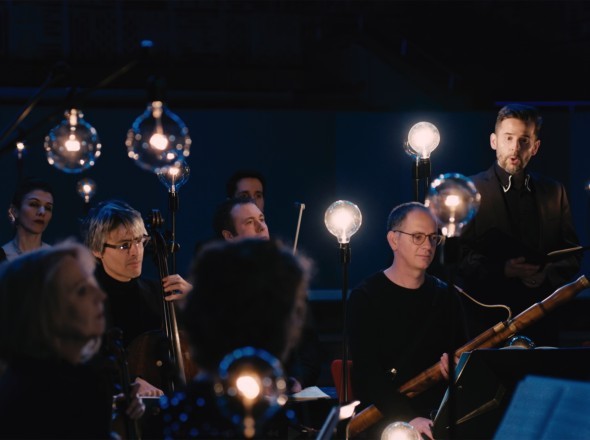
Fallt mit Danken, fallt mit Loben from Christmas Oratorio
cantatas, BWV 248/4
-
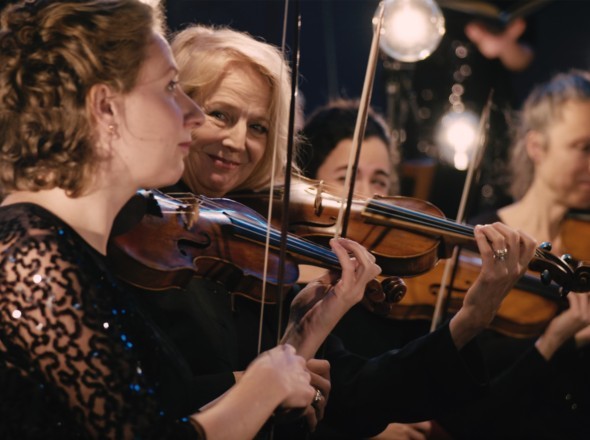
Ehre sei dir, Gott, gesungen from Christmas Oratorio
cantatas, BWV 248/5

Help us to complete All of Bach
There are still many recordings to be made before the whole of Bach’s oeuvre is online. And we can’t complete the task without the financial support of our patrons. Please help us to complete the musical heritage of Bach, by supporting us with a donation!