Prelude in C major
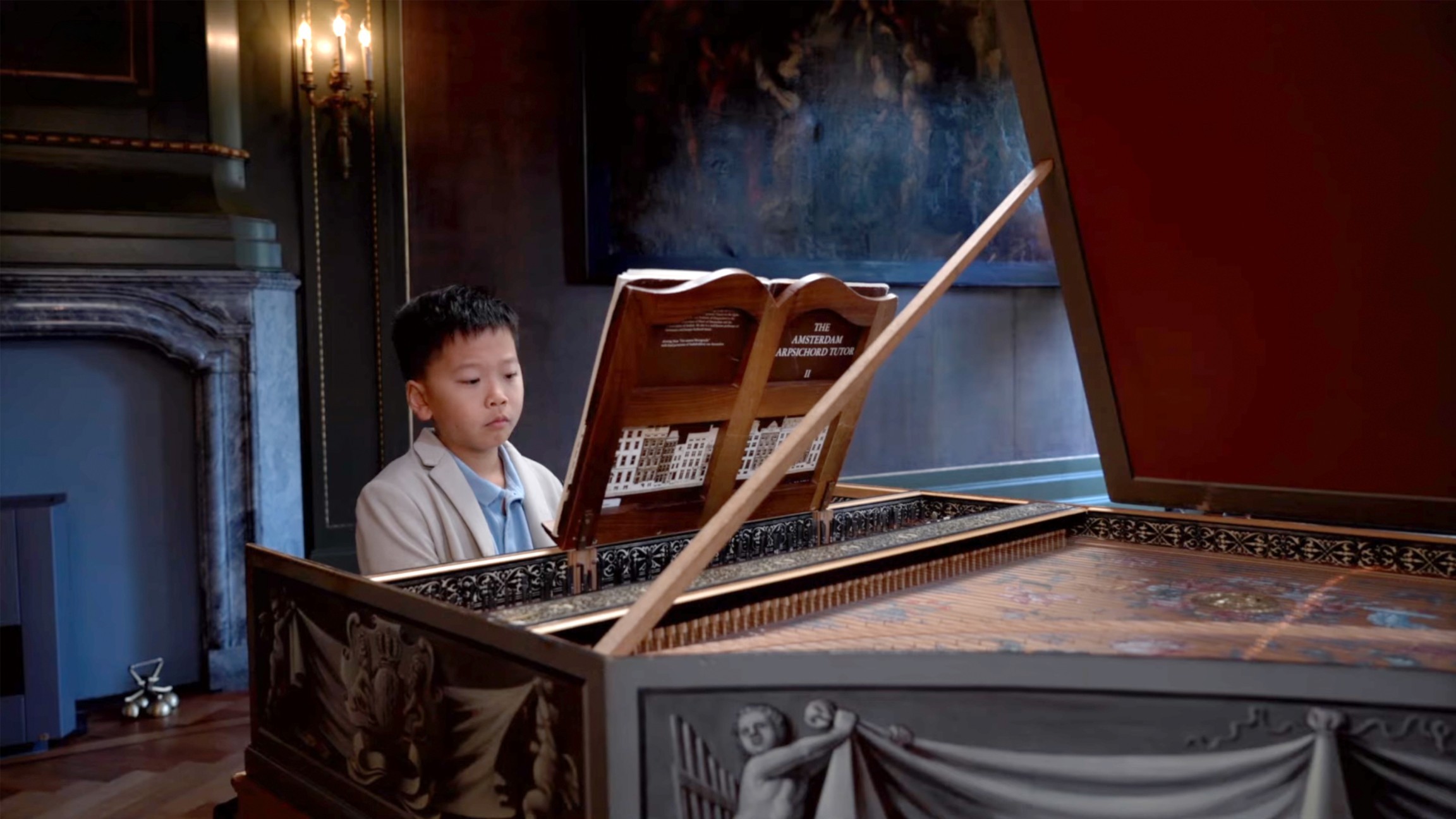
BWV 924 performed by Shuxian Ding
Maltezerhuis, Utrecht
Behind the music
Story
Story
Extra videos
Extra videos
Credits
Credits
Hypnotic
In this mini prelude, Bach puts you in a trance
Bach is one of the most celebrated composers of all time, but during his life he was also regarded as an outstanding teacher. His best pupils were possibly his wife and children, for whom he wrote a number of Klavierbüchlein, or exercise booklets, containing brief pedagogic tips and simple practice pieces. By practicing them, his family learned not only keyboard playing, but also the ins and outs of music theory and composition. In this way, Bach continued the tradition of his musical family, as he himself had been taught by his big brother Johann Christoph.
Around 1720, when Bach’s eldest son was ten, his father wrote the first teaching method we know for him. The Klavierbüchlein für Wilhelm Friedemann is still regarded as one of the classics in the pedagogic genre, and is popular among piano teachers who want to give their pupils a first introduction to Bach’s work. There are more than sixty pieces in the booklet, ordered by level and ranging from the simple Applicatio in C major, BWV 994, to the relatively challenging three-part Sinfonias. The lion’s share was written by father Bach, but some were by other composers and some even appear to be by Friedemann himself; blood will tell.
The Prelude in C major, BWV 924, number 26 in the Klavierbüchlein, is a fascinating little piece. Throughout the work, we hear practically no melody at all. Instead, there is a repeating pattern of four notes in the left hand, known as figuration. This constantly repeating figuration has a hypnotic, almost psychedelic effect, like the symmetrical patterns of a kaleidoscope. Beneath the surface of the figuration, the harmony keeps changing colour. This harmony, in turn, is constructed logically, with no strange twists and with a clear direction. Listening to it, you can shut your eyes and almost enter a light musical trance. In this respect, the piece strongly resembles another well-known work by Bach: the first prelude from the Wohltemperirtes Clavier. But the story Bach tells here in BWV 924 is less ethereal and more human. It is as if we are climbing a mountain step by step, till we reach the summit and look out over a valley filled with little lights.
Young talent
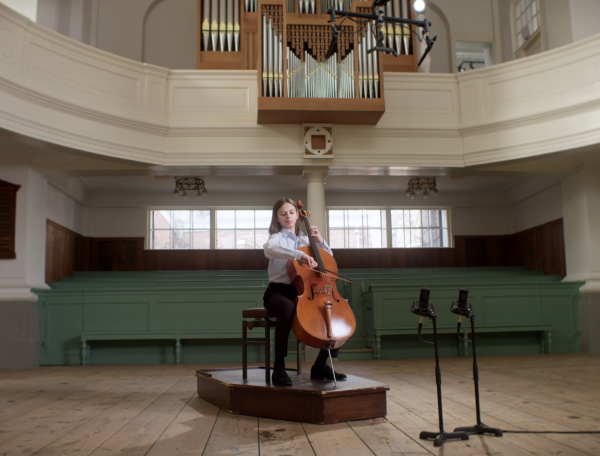
Once every two or three years, the Netherlands Bach Society organises a talent development project for gifted young musicians under the age of 18. The projects, which focus on the performance practice of Bach’s music, allows us to bring talented youngsters into contact with historical performance practice and give them deeper insight into Bach’s music. In this project, we worked with keyboardists of the future. Seven very talented international youngsters between twelve and eighteen years old were selected from auditions to take two masterclasses about Bach, the harpsichord and baroque playing techniques and styles, given by Siebe Henstra. Each keyboardist rehearsed movements from the Klavierbüchlein für Wilhelm Friedemann Bach, including the Nine Little Preludes, BWV 924-932, which Bach wrote to use in lessons with his son Wilhelm Friedemann. The rehearsed works were recorded for All of Bach in October 2024, at the Maltezerhuis in Utrecht.
Extra videos
Vocal texts
Original
Translation
Credits
-
- Release date
- 28 May 2026
-
- Recording date
- 16 October 2024
-
- Location
- Maltezerhuis, Utrecht
-
- Harpsichord
- Shuxian Ding
-
- Instrument
- Titus Crijnen, 1992 after Johannes Ruckers, 1638
-
- Director and camera
- Robin van Erven Dorens
-
- Music recording
- Guido Tichelman, Pim van der Lee
-
- Music recording, edit and mix
- Guido Tichelman
-
- Camera
- Martijn van Beenen
-
- Lights
- Ernst-Jan Thieme
-
- Data handling
- Brechtje van Riel
-
- Assistant music recording
- Marloes Biermans
-
- Producer
- Lisanne Marlou de Kok


Help us to complete All of Bach
There are still many recordings to be made before the whole of Bach’s oeuvre is online. And we can’t complete the task without the financial support of our patrons. Please help us to complete the musical heritage of Bach, by supporting us with a donation!