Nun danket alle Gott
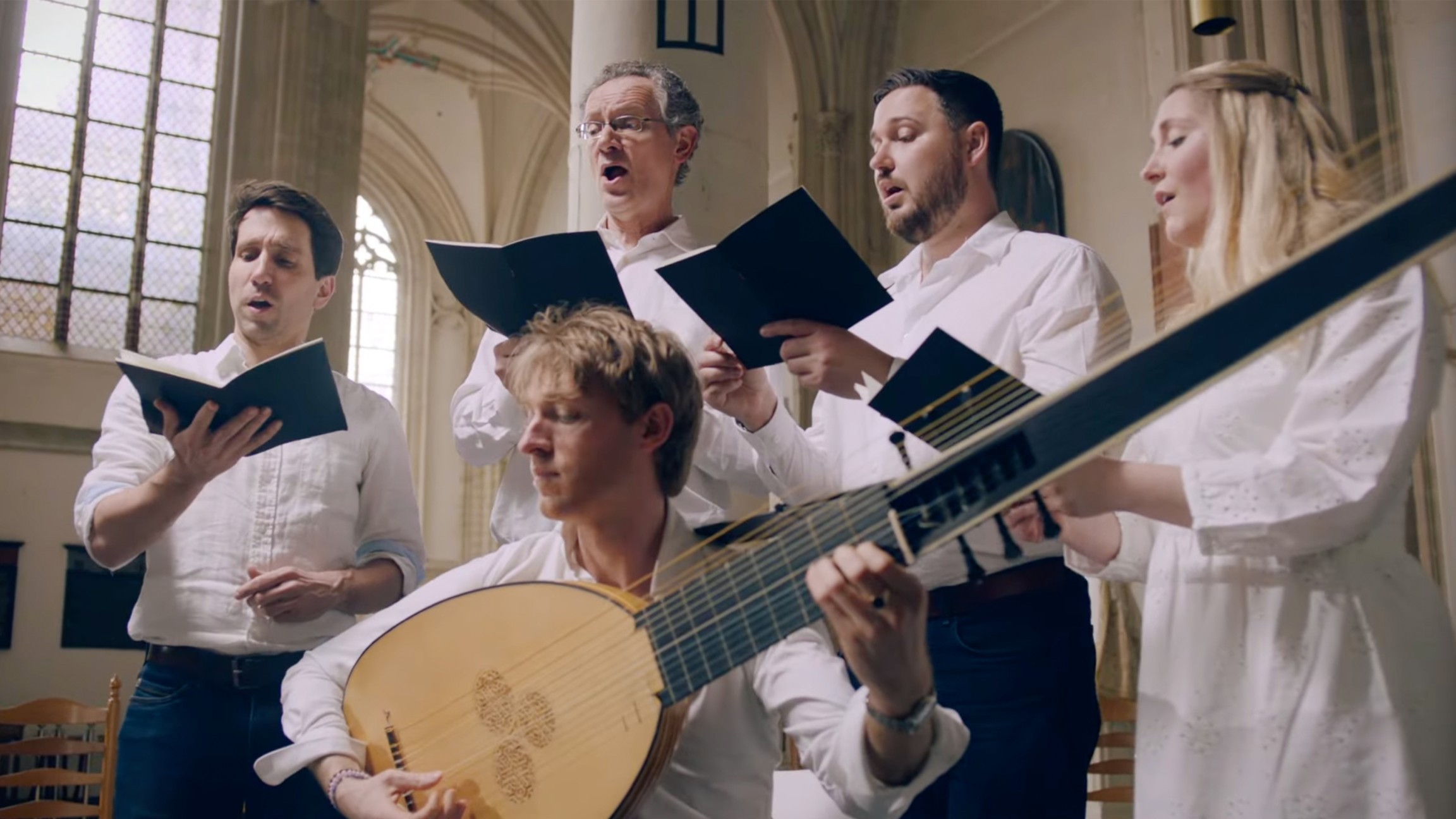
BWV 386 performed by the Netherlands Bach Society
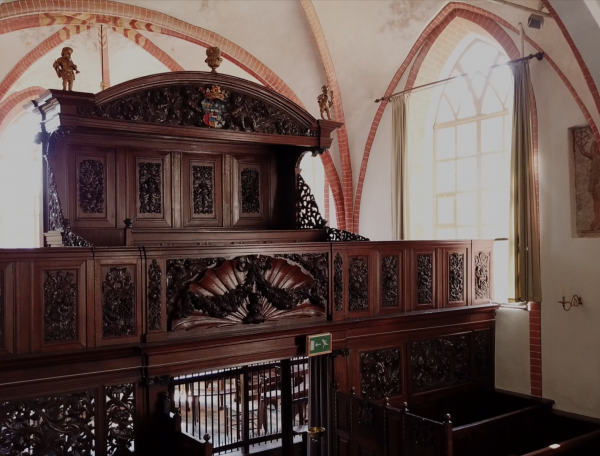
Sint-Gertrudiskerk, Bergen op Zoom
Behind the music
Story
Story
Texts
Texts
Credits
Credits
Praise via Luther
A hymn filled with hope for turbulent times
At a politically crucial meeting on 25 June 1530, Emperor Charles V heard the Augsburg Confession – the confession of faith of the Reformation – against his will. On paper, this meeting was supposed to inform him of the various faiths in his empire, but the court did everything it could to keep the Reformation as small as possible. However, it did not reckon with the Protestant towns and states, who delegated the Saxon lawyer Christian Beyer to read out the Confession. He did so with such clarity and power that the text could also be heard loud and clear outside the far too small chapel. And this text, containing indictments of Catholic excesses penned by Martin Luther, Justus Jonas and particularly Philipp Melanchthon, was to help lay the foundations for the Lutheran movement within the Reformation.
Precisely one year later, the Augsburg Confession was widely commemorated. Once such commemoration was held in the small town of Eilenburg, where amid the violence of the Thirty Years’ War (1618–1648) the clergyman Martin Rinckart wrote a hopeful hymn text that was to become very well-known: ‘Nun danket alle Gott’(later published in his Jesu-Hertz-Büchlein, 1636). In the three verses, Rinckart adjusts Luther’s biblical translation to form a hymn of praise: to God’s grace, to his promise to save mankind and to God himself. Since 1647, Rinckart’s lyrics have been associated with the melody by Johann Crüger.
In Leipzig, ‘Nun danket alle Gott’ was often sung at weddings and on feast days, but also after the Passion on Good Friday, as the death of Jesus was regarded as the sign of God’s salvation. Bach used the melody in at least two cantatas for Reformation Day on 31 October (BWV 79 and 192), as well as in the collection of 18 organ works known as the Leipziger Choräle.
Extra videos
Vocal texts
Original
Nun danket alle Gott
mit Herzen, Mund und Händen,
der große Dinge tut
an uns und allen Enden,
der uns von Mutterleib
und Kindesbeinen an
unzählig viel zugut
und noch jetzund getan.
Der ewig reiche Gott
woll uns bei unserm Leben
ein immer fröhlich Herz
und edlen Frieden geben
und uns in seiner Gnad
erhalten fort und fort
und uns aus aller Not
erlösen hier und dort.
Lob, Ehr und Preis sei Gott,
dem Vater und dem Sohne
und dem, der beiden gleich
im höchsten Himmelsthrone,
dem einig höchsten Gott,
als er anfänglich war
und ist und bleiben wird
jetzt und immer dar.
Translation
Now thank we all our God
With hearts and hands and voices,
Who wondrous things hath done,
In whom His world rejoices;
Who from our mother's arms
Hath blessed us on our way
With countless gifts of love,
And still is ours today.
O may this bounteous God
Through all our life be near us,
With ever joyful hearts
And blessed peace to cheer us,
And keep us in His grace,
And guide us when perplexed,
And free us from all ills
In this world and the next.
All praise and thanks to God
The Father now be given,
The Son and Him who reigns
With them in highest Heaven,
The one eternal God,
Whom earth and Heaven adore;
For thus it was, is now,
And shall be evermore.
vertaling © Catherine Winkworth (1858)
Credits
-
- Release date
- 8 januari 2026
-
- Recording date
- 6 May 2024
-
- Location
- Sint-Gertrudiskerk, Bergen op Zoom
-
- Soprano
- Amelia Berridge
-
- Alto
- Tim Braithwaite
-
- Tenor
- Adriaan De Koster
-
- Bass
- Donald Bentvelsen
-
- Theorbo
- David Mackor
-
- Director and editor
- Onno van Ameijde
-
- Music recording
- Guido Tichelman, Pim van der Lee
-
- Music edit and mix
- Guido Tichelman
-
- Camera
- Jesper Blok, Jorne Tielemans
-
- Focus pull
- Glenn van Neerden
-
- Lights
- Jorne Tielemans, Patrick Galvin
-
- Project manager nep
- Ron Vermeulen
-
- Assistant music recording
- Marloes Biermans
-
- Producer
- Lisanne Marlou de Kok, Stephan Esmeijer
Help us to complete All of Bach
There are still many recordings to be made before the whole of Bach’s oeuvre is online. And we can’t complete the task without the financial support of our patrons. Please help us to complete the musical heritage of Bach, by supporting us with a donation!