Christ lag in Todesbanden
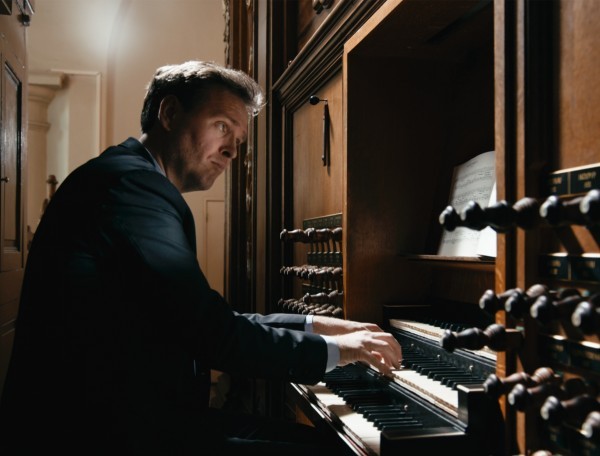
BWV 625 performed by Bart Naessens
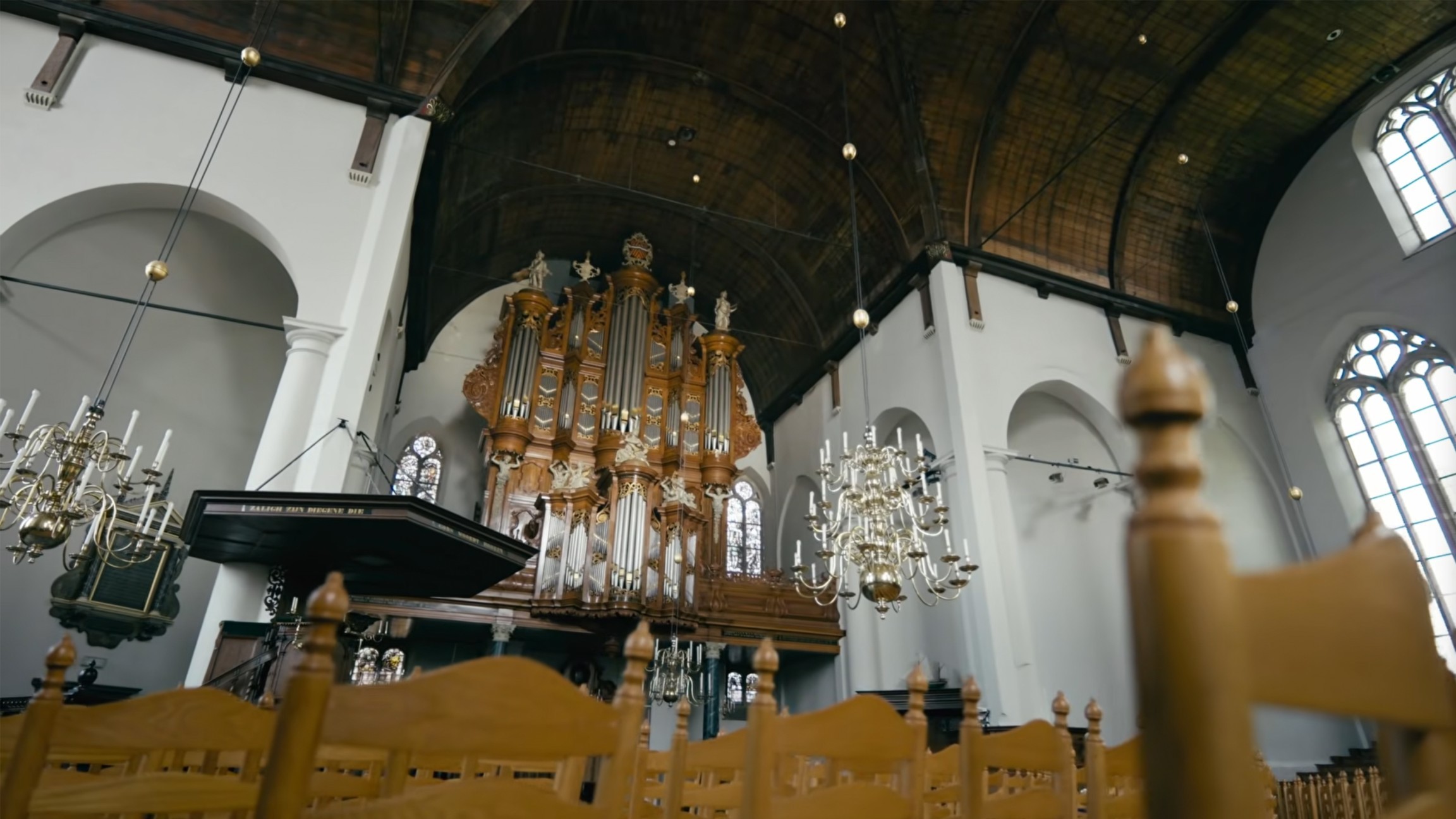
Groote Kerk, Maassluis
Behind the music
Story
Story
Credits
Credits
Living in death
This Easter melody joyfully heralds eternity
Jesus died in order to grant eternal life to the faithful. This idea – reconciliation with a merciful God through his immense sacrifice – lies at the heart of Christian belief and is celebrated at Easter time. In Bach’s day, people discussed this mystery in the words of Luther, for example in the chorale text ‘Christ lag in Todesbanden’, from 1524. Freely inspired by the 11th-century Easter hymn ‘Victimae paschali laudes’, the great reformer Luther wrote lyrics that are almost didactic in tone. They focus on the universal battle with death and the victory over it – just like the Paschal lamb that is symbolically sacrificed, so that a sinner may find mercy.
Bach set Luther’s text to music: once in its entirety (BWV 4) and once as a final chorale (BWV 158). The chorale melody appears occasionally in his organ works as well. Whereas BWV 718 explores both the darker and the more cheerful sides of the theological theme, all the attention in this compact BWV 625 is turned to the victory. Below a jubilant upper voice, the alto, tenor and bass lines can let rip throughout the piece with a ‘rolling’ motif of semiquavers. In this flurry of activity, one phrase stands out for its rich, poignant harmony: the line that has the text ‘Gott loben und ihm dankbar sein’ in the first verse, but in following verses often includes the word ‘death’. A small yet fine illustration of the word painting that dominates Bach’s early works.
Orgelbüchlein, BWV 599-644
During his time as court organist at Weimar (1708-1714), Bach already started compiling his first collection of chorale arrangements and chorale preludes (compositions based on Lutheran hymns). They were intended to be used in church services, and the preludes were an introduction to congregational singing. According to the list of contents in Bach’s manuscript, it was supposed to have been a collection of 164 compositions, but in the end it did not exceed 46 (BWV 599-644). The order, combined with the limited length of the pieces, indicates that Bach was planning to compile a complete cycle of chorale arrangements. Later, in his period at Köthen, he gave the collection a title page, which reads: ‘Orgel-Büchlein, Worinne einem anfahenden Organisten Anleitung gegeben wird, auff allerhand Arth einen Choral durchzuführen…’ (‘Little organ book, in which a beginner organist is taught to arrange a chorale in all sorts of ways...’). So at the time, he intended the collection just as a teaching manual, maybe to present on his application in 1722 for the post of cantor at the Thomasschule in Leipzig, which was an important teaching position. The pupils must have had a hard time of it, as the preludes contain the complete range of baroque keyboard techniques in a nutshell.
With support from
Rev Nancy and Dr William Raabe
Extra videos
Vocal texts
Original
Translation
Credits
-
- Release date
- 23 April 2026
-
- Recording date
- 14 May 2025
-
- Location
- Groote Kerk, Maassluis
-
- Organ
- Bart Naessens
-
- Instrument
- Rudolph Garrels, 1732
-
- Director and editor
- Onno van Ameijde
-
- Music recording
- Guido Tichelman, Pim van der Lee
-
- Music edit and mix
- Guido Tichelman
-
- Camera
- Onno van Ameijde, Rieks Soepenberg, Merijn Stojansek
-
- Assistant music recording
- Marloes Biermans
-
- Producer
- Lisanne Marlou de Kok

Help us to complete All of Bach
There are still many recordings to be made before the whole of Bach’s oeuvre is online. And we can’t complete the task without the financial support of our patrons. Please help us to complete the musical heritage of Bach, by supporting us with a donation!