Partite diverse sopra: O Gott du frommer Gott
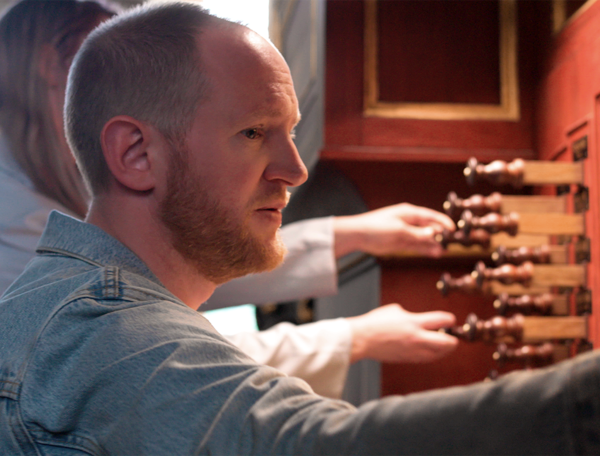
BWV 767 performed by Matthias Havinga
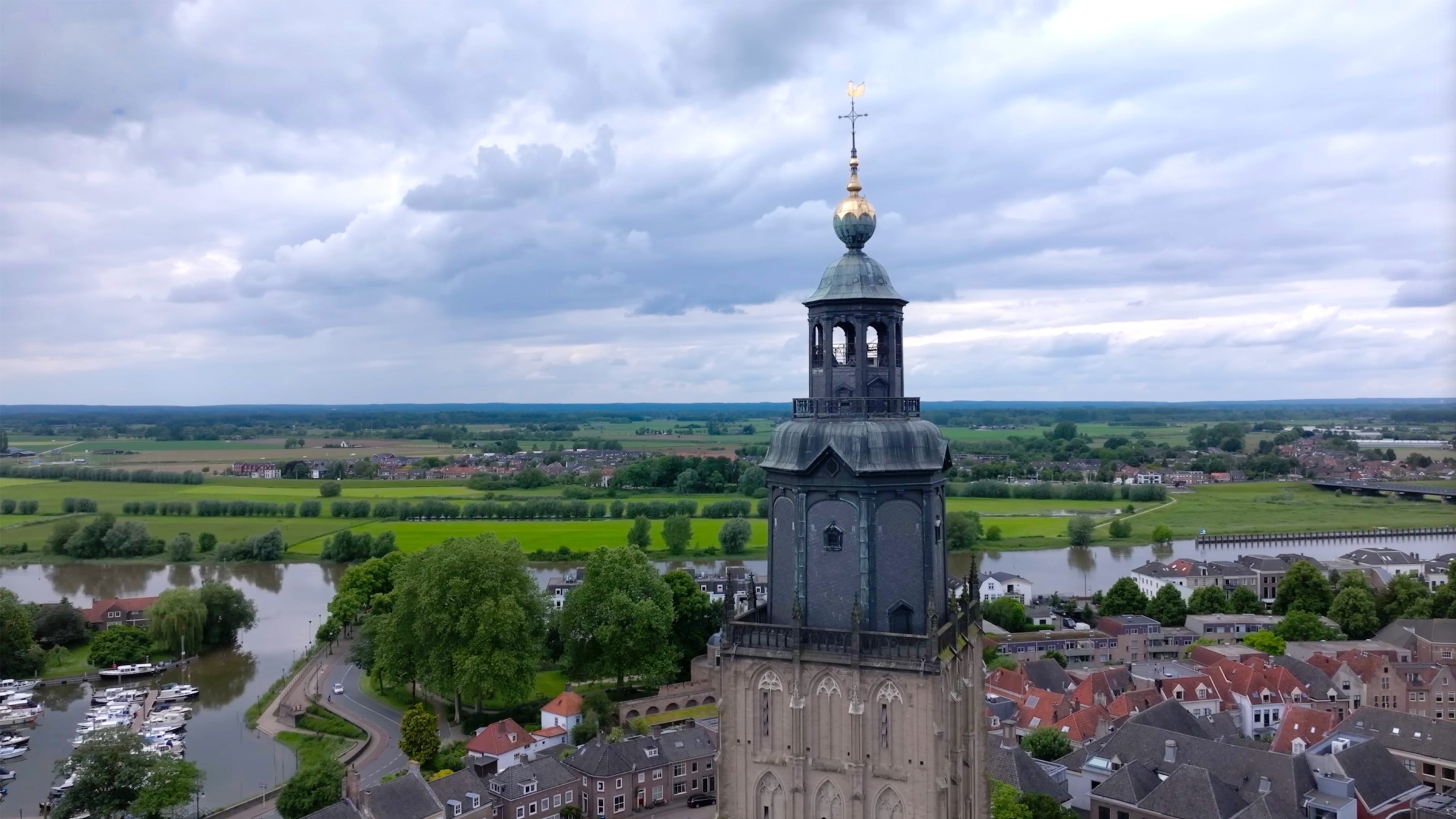
Walburgiskerk, Zutphen
Behind the music
Story
Story
Extra videos
Extra videos
Credits
Credits
Learning the art of variation
A young Bach explores his master’s path
In 2005, precious evidence turned up in Weimar that the young Bach must have taken lessons from the great organ master Georg Böhm from Lüneburg. Until 2005, this had only been a suspicion. What was the evidence? A handwritten copy by Bach of a chorale fantasy by the famous organist Reincken, at the end of which Bach noted: ‘copied at the home of Mr Georg Böhm in 1700’.
The teacher-student relationship between Böhm and Bach may well explain the form of this ‘partite diverse sopra’, or ' various variations on' the chorale O Gott, du frommer Gott. Once he became an adult, Bach would think more in big harmonic structures, but here everything revolves around small-scale character development. Just like Böhm (and Buxtehude), Bach keeps expressing different emotions, a bit like in a suite, and he seldom introduces several rhetorical gestures.
The chorale O Gott, du frommer Gott presented Bach with an interesting challenge: what to do with a melody that has little variation (the form is AABA, so three times practically the same line). Simple – you master the basic material. The first partita (variation), for example, first anticipates the phrase and only then presents the whole. This creates scope for an arresting repeated bass line. In the 3rd variation, Bach conceals the chorale in a long, violin-like line. Variation 4 cloaks the melody in an elegant three-four time, with dancy, hopping little figures.
Another solution is to fill in the leaps in the melody, as Bach does in the 2nd, 4th and 7th variations. The leap of a fourth at the beginning now becomes a run that belongs in every composer’s kit, under the name of ‘suspirans’. A perpetuum mobile was another popular technique, as were chromatic games and the quick, strong chords they produced, as heard at the end of the 7th variation.
The final variation, with its alternating registers, forms a dignified and extravagant ending to the series and reflects the music inspired by France that Bach had previously come into contact with through his brother Johann Christoph. The three contrasting sections could suggest the doxology (‘Praise be to the Father…’). Anyhow, specialists are at least certain that Bach is expressing something of the chorale text; a prayer for succour until death.
Extra videos
Vocal texts
Original
Translation
Credits
-
- Release date
- 12 February 2026
-
- Recording date
- 30 May 2024
-
- Location
- Walburgiskerk, Zutphen
-
- Organ
- Matthias Havinga
-
- Organ registration
- Annie Spink
-
- Instrument
- Henrick Bader, 1639/1643
-
- Director and editor
- Gijs Besseling
-
- Music recording
- Guido Tichelman, Pim van der Lee
-
- Music edit and mix
- Guido Tichelman
-
- Camera
- Danny Noordanus, Manon Hoskens, Remco van Leest
-
- Grip
- Wouter Visser
-
- Assistant music recording
- Marloes Biermans
-
- Producer
- Lisanne Marlou de Kok

Help us to complete All of Bach
There are still many recordings to be made before the whole of Bach’s oeuvre is online. And we can’t complete the task without the financial support of our patrons. Please help us to complete the musical heritage of Bach, by supporting us with a donation!