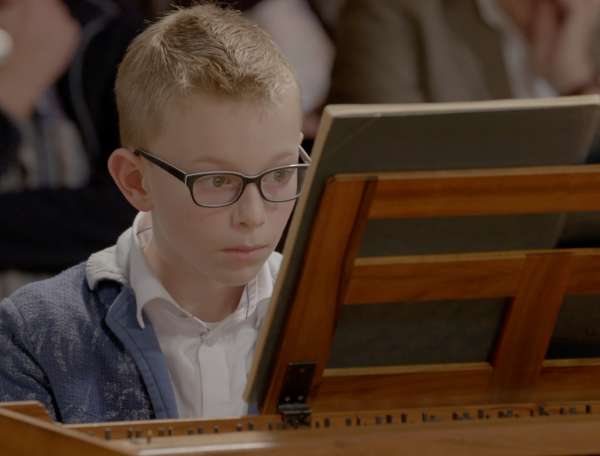
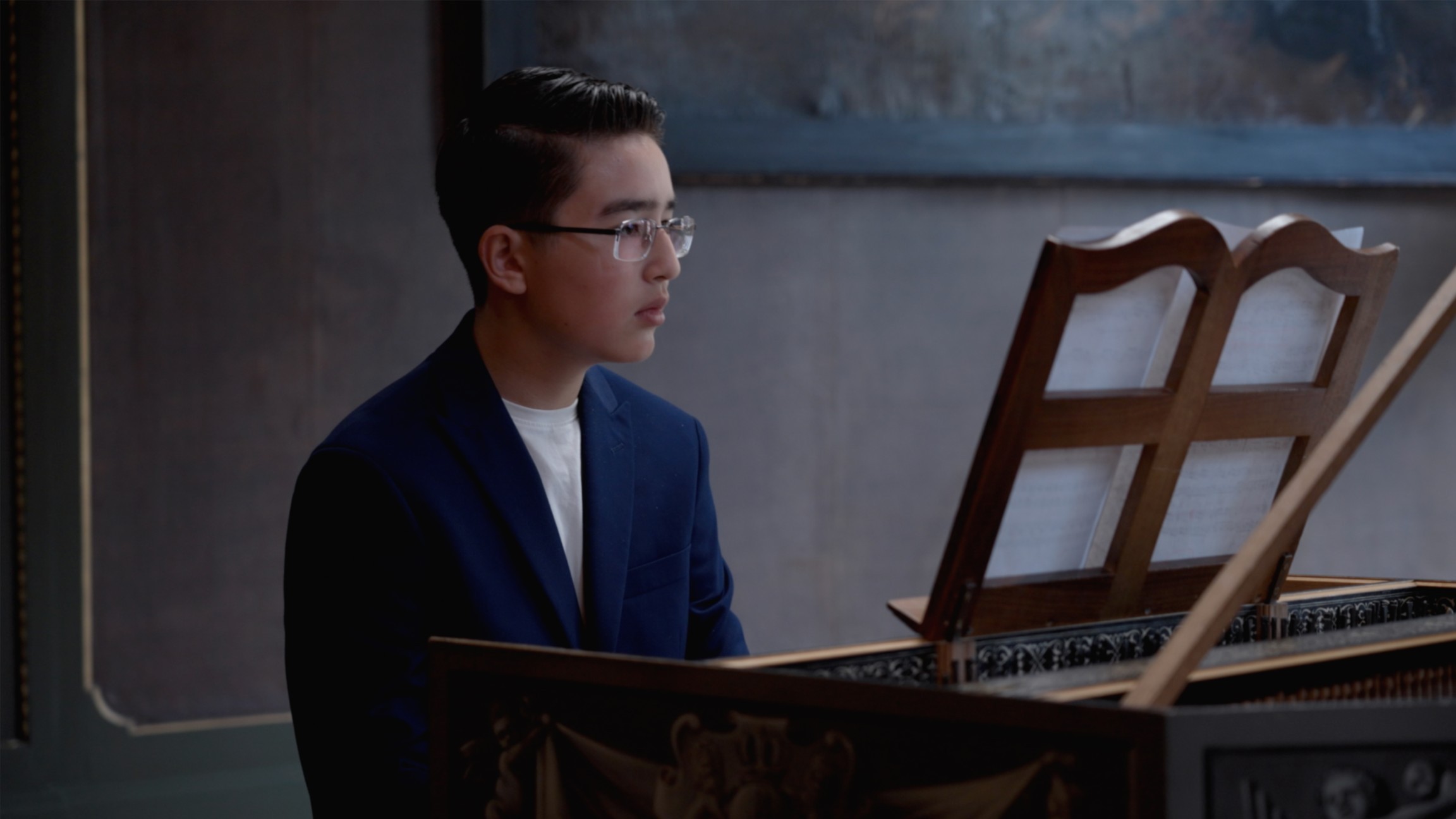
Minuet in G major
BWV 843 performed by Fernando Lourens
Maltezerhuis, Utrecht
Behind the music
Story
Story
Extra videos
Extra videos
Credits
Credits
Purely figurative
A nervous rhythm runs off with a minuet
In his ‘school music’, Bach proved himself a very demanding teacher. He took his students firmly in hand, so that their technique could develop at top speed, albeit step by step. One of them was his own son Wilhelm Friedemann, who was an exceptionally talented student, both in performance and in composition. In the Klavierbüchlein – the music book in which both father and son notated pieces from 1720 onwards, and through which Johann Sebastian aimed to foster virtuosity and creativity in Wilhelm Friedemann – you can easily follow the young musician’s progress. Here and there, the collection offers us a glimpse of Bach’s teaching practice, for example where the hand of Johann Sebastian corrects the music of Wilhelm Friedemann.
Then there is this minuet, BWV 843, probably by Bach’s son himself, which immediately stands out for its ambitiousness. Compared to the two ‘brothers’ that directly precede it in the Klavierbüchlein, it takes a huge leap forwards: nearly twice as long and musically richer and more complex… Wilhelm Friedemann clearly had plenty to say already.
At the same time, it is an exercise in the figura corta motif, which does not actually fit well with the usually more calm and stately minuet. Right from the first bar, the long-short-short motif completely takes over the texture. Maybe Johann Sebastian had added it to his previous exercise (BWV 842) and Wilhelm Friedemann wanted to explore it thoroughly? Opinions differ as to whether he succeeded in this, or whether the effect of all these figure corte might be rather too playful.
Young talent
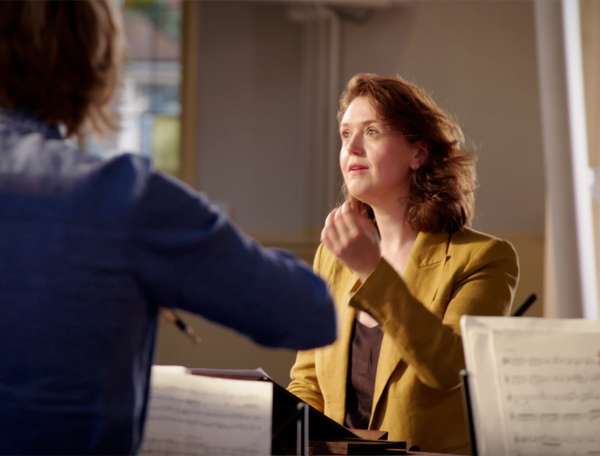
Once every two or three years, the Netherlands Bach Society organises a talent development project for gifted young musicians under the age of 18. The projects, which focus on the performance practice of Bach’s music, allows us to bring talented youngsters into contact with historical performance practice and give them deeper insight into Bach’s music. In this project, we worked with keyboardists of the future. Seven very talented international youngsters between twelve and eighteen years old were selected from auditions to take two masterclasses about Bach, the harpsichord and baroque playing techniques and styles, given by Siebe Henstra. Each keyboardist rehearsed movements from the Klavierbüchlein für Wilhelm Friedemann Bach, including the Nine Little Preludes, BWV 924-932, which Bach wrote to use in lessons with his son Wilhelm Friedemann. The rehearsed works were recorded for All of Bach in October 2024, at the Maltezerhuis in Utrecht.
Extra videos
Vocal texts
Original
Translation
Credits
-
- Release date
- 20 November 2025
-
- Recording date
- 16 October 2024
-
- Location
- Maltezerhuis, Utrecht
-
- Harpsichord
- Fernando Lourens
-
- Instrument
- Titus Crijnen, 1992 after Johannes Ruckers, 1638
-
- Director and camera
- Robin van Erven-Dorens
-
- Music recording
- Guido Tichelman, Pim van der Lee
-
- Music recording, edit and mix
- Guido Tichelman
-
- Camera
- Martijn van Beenen
-
- Lights
- Ernst-Jan Thieme
-
- Data handling
- Brechtje van Riel
-
- Assistant music recording
- Marloes Biermans
-
- Producer
- Lisanne Marlou de Kok

Help us to complete All of Bach
There are still many recordings to be made before the whole of Bach’s oeuvre is online. And we can’t complete the task without the financial support of our patrons. Please help us to complete the musical heritage of Bach, by supporting us with a donation!