Violin Sonata no. 5 in F minor
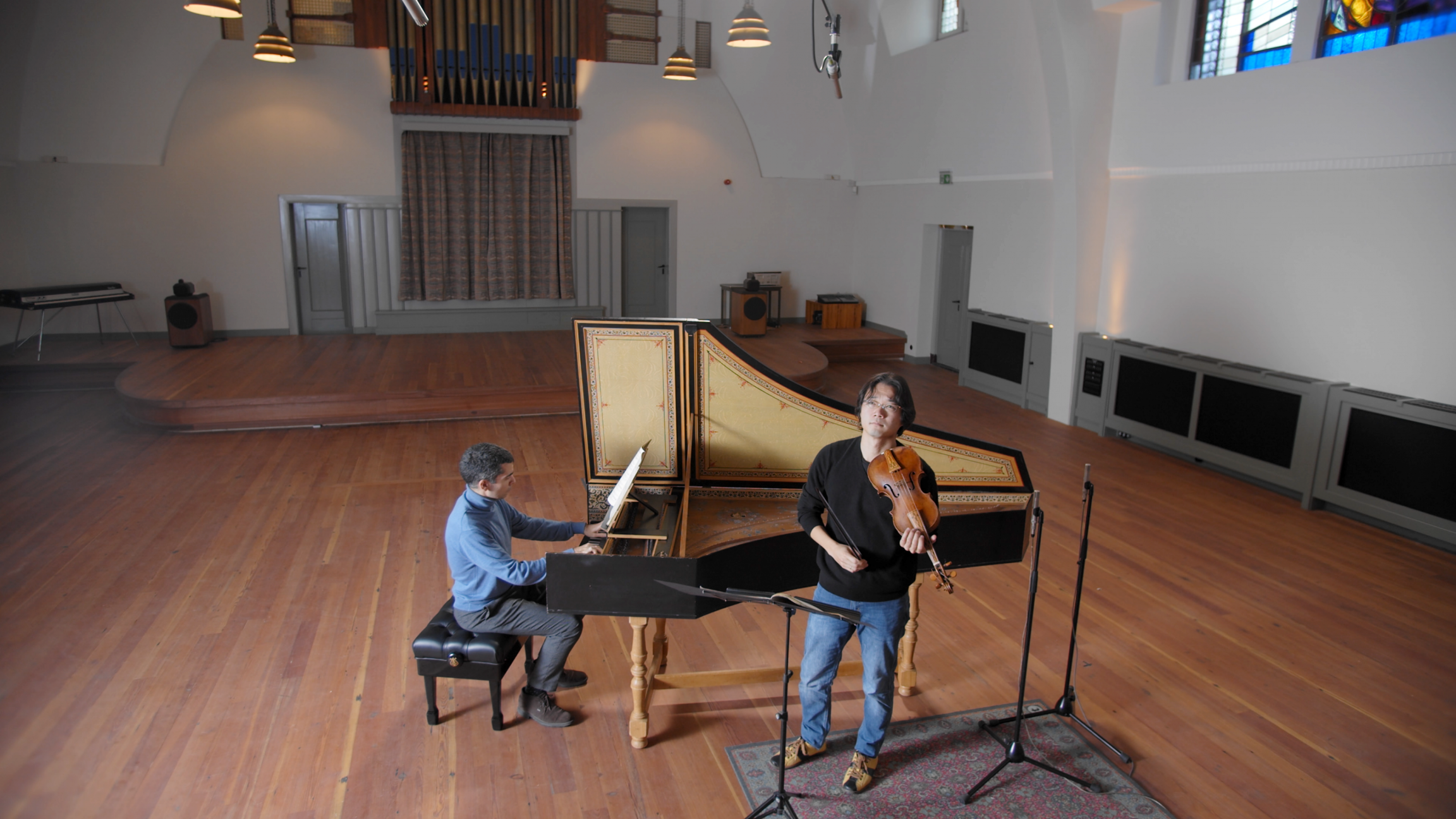
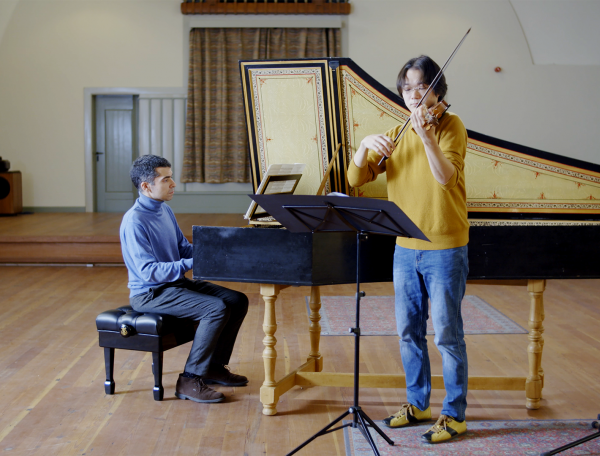
BWV 1018 performed by Shunske Sato and Diego Ares
at Studio 150 - Bethlehemchurch, Amsterdam
Behind the music
Story
Story
Extra videos
Extra videos
Credits
Credits
Singable sonatas
Bach looks ahead to Mozart and looks back on Corelli
In 1774, Carl Philipp Emanuel Bach remarked on his father’s sonatas for violin and harpsichord that they were still very enjoyable “despite being more than 50 years old”. In his day, it was definitely not taken for granted that music would still be played half a century later. As suggested by Carl Philipp’s remark, Bach probably wrote these sonatas in his time in Köthen, around 1717-1723. However, he kept on fine-tuning them his whole life: a clear sign that he, too, thought these works were a success.
Another thing that helped retain the attractiveness of these sonatas was their instrumentation. Instead of the trio sonatas for two violins and basso continuo that were prevalent at the beginning of the eighteenth century (e.g. Corelli), these sonatas were for keyboard instrument and one violin. So they also suited the times of Carl Philipp and later (take Mozart’s sonatas for piano and violin, for example). Yet in some movements, the older trio sonata form is still just under the surface. In the second movement of this sonata, you could also imagine the notes of the right hand of the keyboard being played on a second violin.
Carl Philipp wrote that his father’s sonatas contained “some adagios that people today would not be able to write more melodiously [sangbarer]”. And indeed, it is often the slower movements that move us most directly (both in Carl Philipp’s day and nowadays). This sonata is an example of that, as well. The first movement is actually a melancholic aria for violin – and it doesn’t get much more ‘singable’ than that.
With support from
Bert Terpstra and Hisako Morioka
Extra videos
Vocal texts
Original
Translation
Credits
-
- Release date
- 9 December 2021
-
- Recording date
- 4 November 2020
-
- Location
- Studio 150 - former Bethlehemchurch, Amsterdam
-
- Violin
- Shunske Sato
-
- Harpsichord
- Diego Ares
-
- Instrument
- Joel Katzman, 1991 after Ruckers, 1638
-
- Director, camera and lights
- Gijs Besseling
-
- Music recording
- Guido Tichelman, Joeri Saal
-
- Music edit and mix
- Guido Tichelman
-
- Camera, lights
- Danny Noordanus
-
- Data handling
- Stefan Ebels
-
- Assistant music recording
- Marloes Biermans
-
- Producer
- Jessie Verbrugh
-
- With support from
- Bert Terpstra and Hisako Morioka
Help us to complete All of Bach
There are still many recordings to be made before the whole of Bach’s oeuvre is online. And we can’t complete the task without the financial support of our patrons. Please help us to complete the musical heritage of Bach, by supporting us with a donation!