Wir danken dir, Gott, wir danken dir
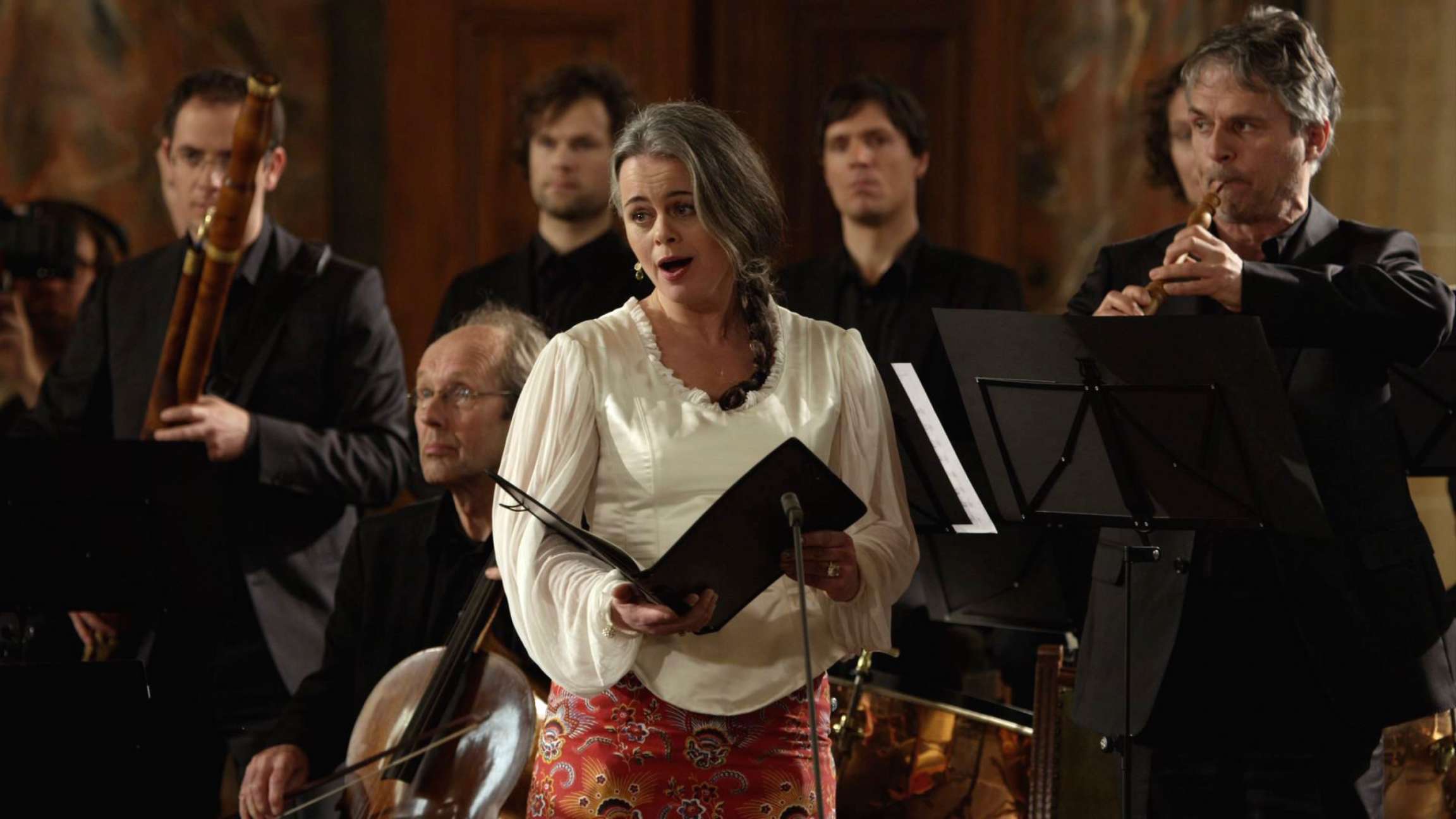
BWV 29 performed by the Netherlands Bach Society
conducted by Jos van Veldhoven
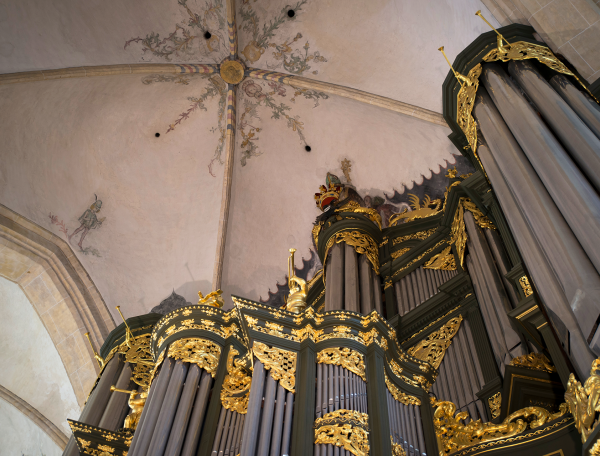
St. Martin's Church, Groningen
Behind the music
Story
Story
Extra videos
Extra videos
Texts
Texts
Credits
Credits
High school cutting and pasting
Bach made ingenious use of compositions he had written earlier, blending them with new additions to form a perfect unity
Around a quarter of cantata BWV 29 consists of notes Bach had written earlier. The festive sinfonia comes from a wedding cantata presumed to have been written in 1729. The organ ‘tune’, nowadays better known as the ‘Nokia tune’, is much older. Bach composed this melody in Köthen in 1720, as a piece for solo violin.
The opening chorus ‘Wir danken dir, Gott’ is also better known in another guise, namely as the ‘Gratias’ and the ‘Dona nobis pacem’ from the Mass in B minor. The version in this cantata is older, and because the melody does not really seem to be designed for the words of psalm 75, it is thought there was an even earlier version with different text. However, the old-style setting does make a perfect match for the message of the psalm text. More and more people lend their support, and the gratitude swells. At the end, three trumpets and drums join in with four choir voices, creating a seven-voice whole - the number of fullness.
There is a big contrast between the ‘Wir danken dir, Gott’ in old style and the baroque, concertante opening piece. Yet Bach creates a strong unity with the parts he added. Around the soprano aria ‘Gedenk an uns in deiner Liebe’ in the middle of the cantata, he put two recitatives and two arias. The arias have the same text, ‘Halleluja, Stärk und Macht’, and the second one for alto is a sort of concentrated version of the first one for tenor. The cantata then ends with a solemn chorale setting that - partly through the trumpets and drums - links up again with the ‘Wir danken dir, Gott’.
Extra videos
Conductor Jos van Veldhoven
"Bach wrote this cantata for the inauguration of the new City Council.It mattered to him that it should be a very special cantata"
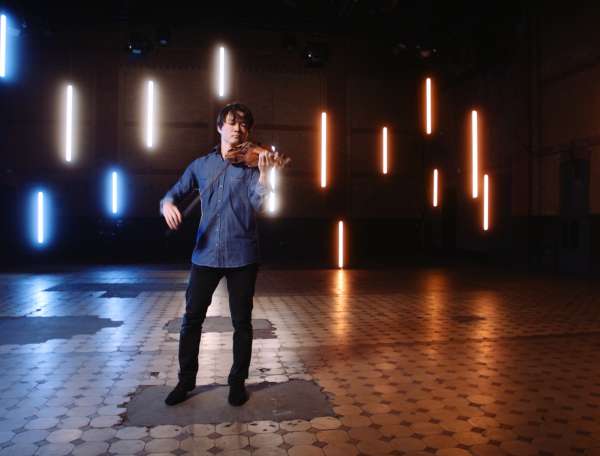
Leo van Doeselaar and Shunske Sato
"The opening sinfonia is based on Bach's third violin partita. Organist Leo van Doeselaar and violinist Shunske Sato compare the two works."
Vocal texts
Original
1. Sinfonia
2. Chor
Wir danken dir, Gott,
wir danken dir
und verkündigen
deine Wunder.
3. Arie (Tenor)
Halleluja, Stärk und Macht
sei des Allerhöchsten Namen!
Zion ist noch seine Stadt,
da er seine Wohnung hat,
da er noch bei unserm Samen
an der Väter Bund gedacht.
4. Rezitativ (Bass)
Gottlob! Es geht uns wohl!
Gott ist noch unsre Zuversicht,
sein Schutz, sein Trost und Licht
beschirmt die Stadt und die Paläste,
sein Flügel hält die Mauern feste.
Er lässt uns allerorten segnen,
der Treue, die den Frieden küsst,
muss für und für
Gerechtigkeit begegnen.
Wo ist ein solches Volk wie wir,
dem Gott so nah und gnädig ist!
5. Arie (Sopran)
Gedenk an uns mit deiner Liebe,
schleuss uns in dein Erbarmen ein!
Segne die, so uns regieren,
Die uns leiten, schützen, führen,
segne, die gehorsam sein!
6. Rezitativ (Alt, Chor)
Vergiss es ferner nicht,
mit deiner Hand
uns Gutes zu erweisen;
so soll
dich unsre Stadt und unser Land,
das deiner Ehre voll,
mit Opfern und mit Danken preisen,
und alles Volk soll sagen:
amen!
7. Arie (Alt)
Halleluja, Stärk und Macht
sei des Allerhöchsten Namen!
8. Choral
Sei Lob und Preis mit Ehren
Gott Vater, Sohn, Heiligem Geist!
Der woll in uns vermehren,
was er uns aus Gnaden verheisst,
dass wir ihm fest vertrauen,
gänzlich verlassn auf ihn,
von Herzen auf ihn bauen,
dass unsr Herz, Mut und Sinn
ihm tröstlich solln anhangen;
drauf singen wir zur Stund:
amen, wir werden's erlangen,
glaubn wir aus Herzens Grund.
Translation
1. Sinfonia
2. Chorus
We thank you, God,
we thank you
and proclaim
your wonders.
3. Aria (Tenor)
Hallelujah; strength and might
Be to the name of the Most High.
Zion is still his city
Where he has his dwelling,
Where, among our seed, he still
Remembers the covenant of the fathers [of Israel].
4. Recitative (Bass)
Praise God; it is well with us.
God is still our refuge;
His protection, his comfort and light,
Shields the city and the palaces;
His [army] wing holds fast the [city] walls.
Everywhere he makes us to be blessed;
Righteousness
Must ever and ever
Meet faithfulness, which kisses peace.
Where is there such a people as us,
To whom God is so close and merciful?
5. Aria (Soprano)
Remember us with your love;
Enclose us in your mercy.
Bless those who rule us,
Who lead, protect, guide us;
Bless those who are obedient.
6. Recitative (Alto, Chorus)
And further, do not forget to bestow
Good things on us
with your hand;
Thus shall
our city, and our land
That [is] full of your honor,
Praise you with offerings and with thanks,
And all the people shall say:
Amen.
7. Aria (Alto)
Hallelujah; strength and might
Be to the name of the Most High.
8. Chorale
Acclamation and praise with honor be
To God Father, Son, Holy Spirit
Who would increase in us
What he, out of mercy, promises us;
That we may trust him steadfastly,
Wholly depend on him,
Rely on him from the heart,
That our heart, courage, and mind
Shall adhere comfortingly to him;
Thus we sing at this hour:
Amen, we will obtain it,
If we believe from the bottom of our heart.
transl. © Daniel R. Melamed and Michael Marissen
For the annotated version of the text and translation, see here.
Latest update: July 2026
Credits
-
- Release date
- 1 August 2014
-
- Recording date
- 15 March 2014
-
- Location
- St. Martin's Church, Groningen
-
- Conductor
- Jos van Veldhoven
-
- Soprano
- Maria Keohane
-
- Alto
- Damien Guillon
-
- Tenor
- Valerio Contaldo
-
- Bass
- Lionel Meunier
-
- Organ
- Leo van Doeselaar
-
- Choir soprano
- Marjon Strijk, Hilde Van Ruymbeke, Klaartje van Veldhoven, Orlanda Velez Isidro
-
- Choir alto
- Victoria Cassano MCDonald, Barnabás Hegyi, Saskia Kruysse, Elena Pozhidaeva
-
- Choir tenor
- Robert Buckland, Diederik Rooker, Ronald Threels, Endrik Üksvärav
-
- Choir bass
- Jelle Draijer, Pierre-Guy le Gall White, Martijn de Graaf Bierbrauwer, Lionel Meunier
-
- Violin 1
- Shunske Sato, Pieter Affourtit, Annelies van der Vegt
-
- Violin 2
- sayuri Yamagata, Anneke van Haaften, Paulien Kostense
-
- Viola
- Staas Swierstra, Femke Huizinga
-
- Cello
- Albert Brüggen, Richte van der Meer
-
- Double bass
- Robert Franenberg
-
- Oboe
- Martin Stadler, Peter Frankenberg
-
- Bassoon
- Benny Aghassi
-
- Trumpet
- Robert Vanryne, Mark Geelen, Fruzsina Hara
-
- Timpani
- Peppie Wiersma
-
- Harpsichord
- Siebe Henstra
-
- Concert production
- Marco Meijdam, Imke Deters
-
- Producer
- Frank van der Weij
-
- Film directors
- Lucas van Woerkum, Joost Honselaar
-
- Director of photography
- Sal Kroonenberg
-
- Camera
- Sal Kroonenberg, Robert Berger, Ruben van den Broeke, Benjamin Sparschuh, Indy Hamid
-
- Film editors
- Lucas van Woerkum, Frank van der Weij
-
- Music recording producer
- Leo de Klerk
-
- Gaffer
- Alban Riphagen
-
- Best boy
- Sam Dupon
-
- Producion assistant
- Zoë de Wilde
-
- Score reader
- Jan Van den Bossche
-
- Make up
- Jamila el Bouch, Marloes Bovenlander, Marloes de Jong
-
- Music producer's assistant
- Menno van Delft
-
- Music recording assistants
- Jaap Firet, Gilius Kreiken, Jaap van Stenis
-
- Music edit and mix
- Leo de Klerk, Frank van der Weij
-
- Music edit and mix asssistant
- Martijn Snoeren
-
- Colorist
- Martijn de Haas
-
- Interviews
- Onno van Ameijde
-
- Acknowledgements
- Jan Haak

Help us to complete All of Bach
There are still many recordings to be made before the whole of Bach’s oeuvre is online. And we can’t complete the task without the financial support of our patrons. Please help us to complete the musical heritage of Bach, by supporting us with a donation!