Wir Christenleut
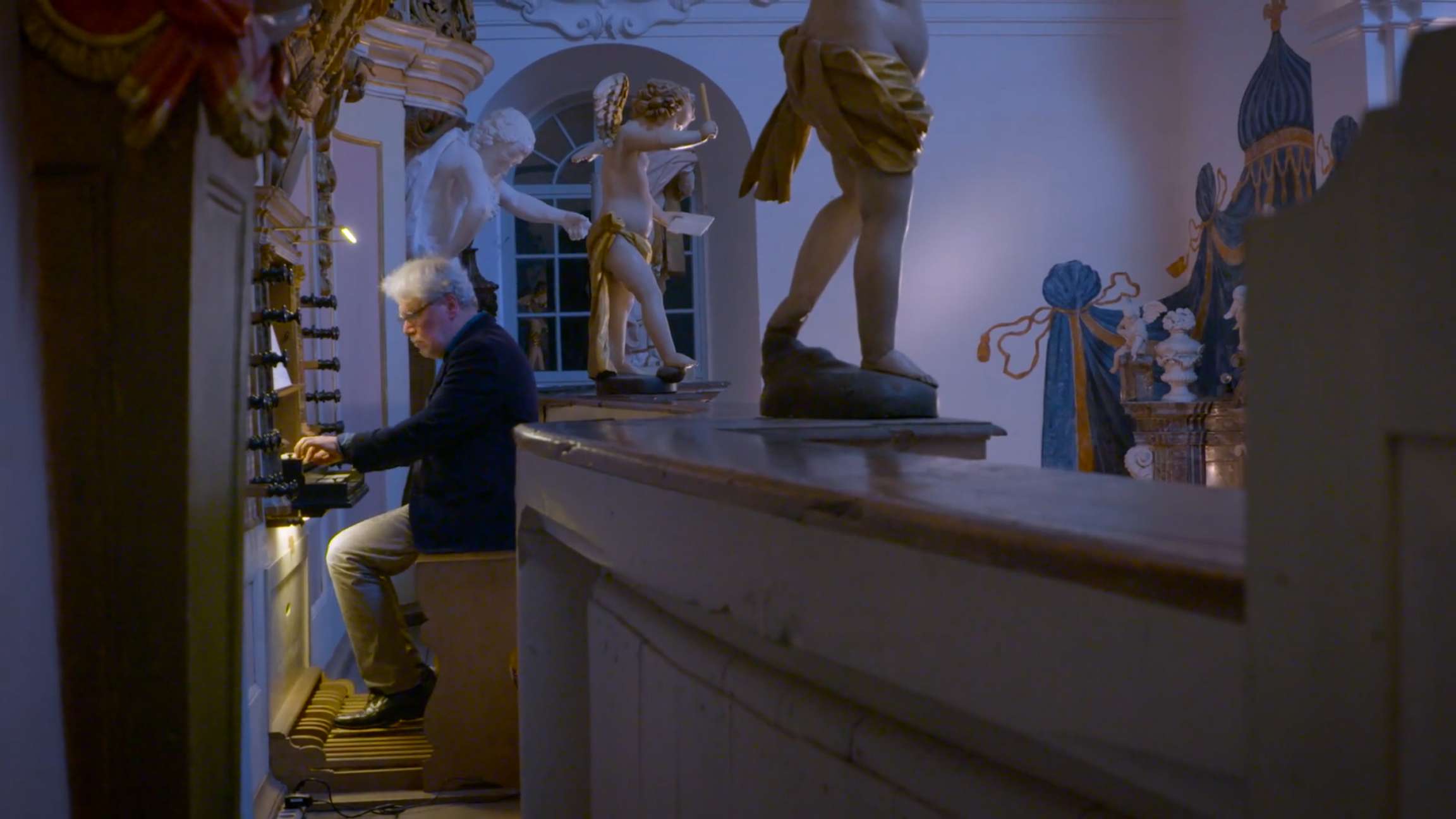
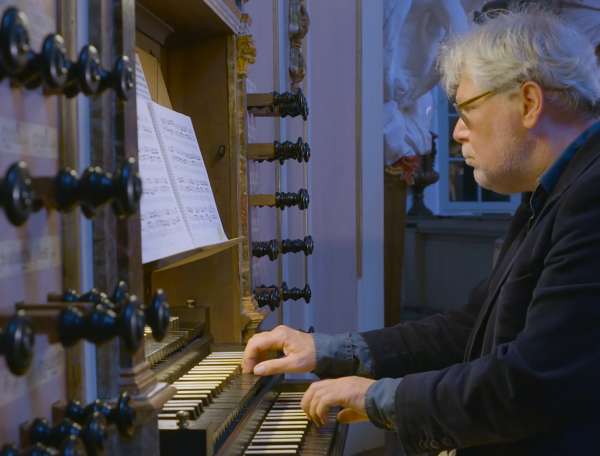
BWV 612 performed by Theo Jellema
Stiftskirche St. Georg, Goslar-Grauhof
Behind the music
Story
Story
Extra videos
Extra videos
Credits
Credits
Perpetuum mobile
Jesus' descent to earth is clearly audible
The first note you hear in this piece is the first note of the hymn Wir Christenleut. That is probably just as well, otherwise we might find the chorale melody being swamped by the cheerfully descending runs. They are prominently present, like a sort of perpetuum mobile. But Bach knew what he was doing. Moreover, in his day everyone knew the melody of this popular Christmas hymn like the back of their hand. The words are about Christ, who redeemed mankind by coming down to earth as a man. So here, the downward runs in the middle parts could symbolise the descent of God’s son to earth, while the chorale melody resounds proudly above the earth in the upper part. The festive joy is heightened by the quavers in the pedal.
Orgelbüchlein, BWV 599-644
During his time as court organist at Weimar (1708-1714), Bach already started compiling his first collection of chorale arrangements and chorale preludes (compositions based on Lutheran hymns). They were intended to be used in church services, and the preludes were an introduction to congregational singing. According to the list of contents in Bach’s manuscript, it was supposed to have been a collection of 164 compositions, but in the end it did not exceed 46 (BWV 599-644). The order, combined with the limited length of the pieces, indicates that Bach was planning to compile a complete cycle of chorale arrangements. Later, in his period at Köthen, he gave the collection a title page, which reads: ‘Orgel-Büchlein, Worinne einem anfahenden Organisten Anleitung gegeben wird, auff allerhand Arth einen Choral durchzuführen…’ (‘Little organ book, in which a beginner organist is taught to arrange a chorale in all sorts of ways...’). So at the time, he intended the collection just as a teaching manual, maybe to present on his application in 1722 for the post of cantor at the Thomasschule in Leipzig, which was an important teaching position. The pupils must have had a hard time of it, as the preludes contain the complete range of baroque keyboard techniques in a nutshell.
Extra videos
Vocal texts
Original
Translation
Credits
-
- Release date
- 13 January 2017
-
- Recording date
- 24 August 2015
-
- Location
- Stiftskirche St. Georg, Goslar-Grauhof
-
- Organist
- Theo Jellema
-
- Organ
- Christoph Treutmann, 1731
-
- Director and editor
- Onno van Ameijde
-
- Camera
- Maarten van Rossem, Onno van Ameijde
-
- Music recording, edit and mix
- Holger Schlegel
-
- Interview
- Onno van Ameijde
-
- Producer
- Jessie Verbrugh
Help us to complete All of Bach
There are still many recordings to be made before the whole of Bach’s oeuvre is online. And we can’t complete the task without the financial support of our patrons. Please help us to complete the musical heritage of Bach, by supporting us with a donation!