Fugue in B minor on a theme by Albinoni
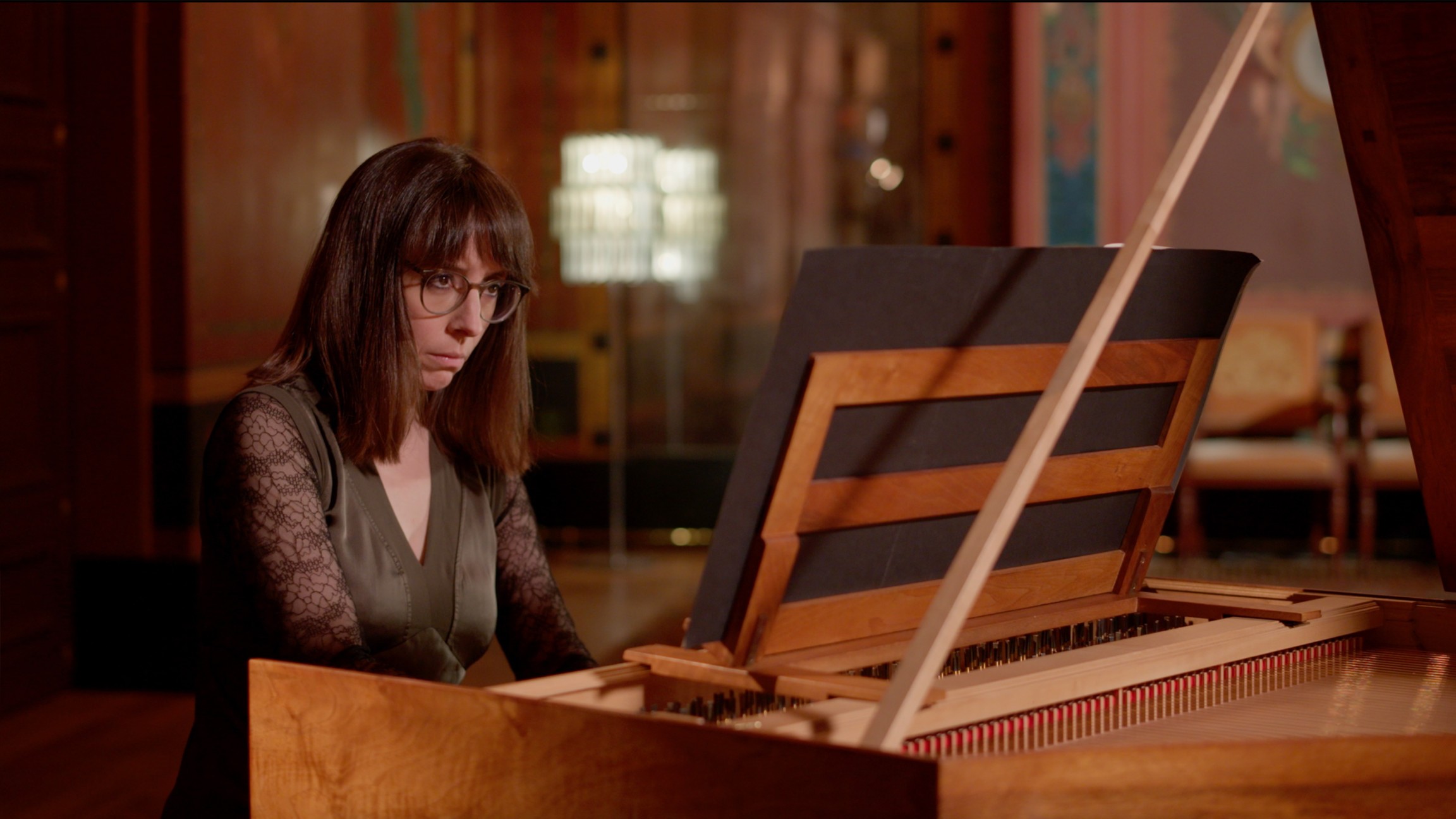
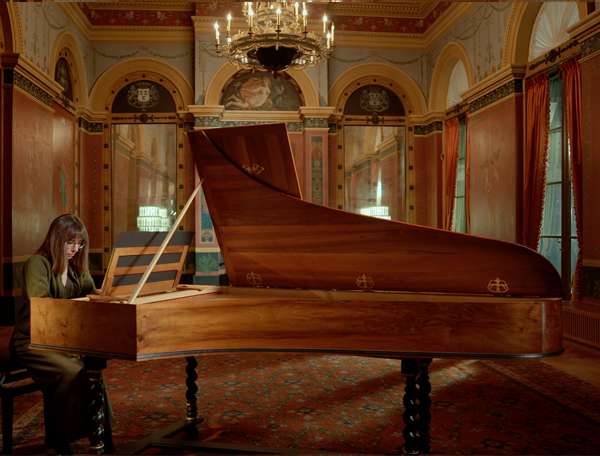
BWV 951 performed by Maude Gratton
Paushuize, Utrecht
Behind the music
Story
Story
Credits
Credits
Borrowing from the masters
Bach gives Italian theme a double makeover
Composer and violinist Tomaso Albinoni can safely be called revolutionary, as he was even ahead of Antonio Vivaldi in sketching the model of the almost universal Venetian solo concerto. From the Baroque aria he borrowed the ritornello principle, an elegantly organised exchange between tutti and solo, setting a new standard with his opus 2 from 1700. Inquisitive composers like Handel and Bach immediately knew what to do and soon adopted the technique.
In the wake of this pioneering publication, Albinoni’s other music streamed northwards. Bach must have had Albinoni’s Trio Sonatas opus 1 (1694) on his shelves, as he used themes from the collection for three of his early fugues. Italian themes anyway provided rewarding material. Bach also borrowed from Corelli and Legrenzi, maybe because they were much more melodious than the often stricter North-German keyboard schools.
The theme of BWV 951 is distinctive for its simplicity, with a lively upward movement in the first bar, followed in the second by a slow chromatic descent and staccato ornamentation. It forms a fruitful basis for a long fugue, in which Bach consistently alternates expressively varied thematic passages with free episodes, just as in Albinoni’s concertos.
BWV 951, however, is in turn also derived from earlier work by Bach himself. Bach’s first version of this fugue (BWV 951a) was a shorter, improvisational patchwork, in which he also cited Albinoni often. This version, which is not in itself regarded as one of Bach’s best pieces of music, had apparently stayed in his mind sufficiently for him to return to it years later and revise it. According to one author, the result is the best ‘manualiter’ (to be played only with the hands) fugue before the publication of the Wohltemperirte Clavier; harmonically streamlined around a symmetrical structure. The fact that BWV 951 turns up in numerous sources is further proof of how popular this fugue was as textbook case, with thanks to its as yet unsurpassed Italian master.
Extra videos
Vocal texts
Original
Translation
Credits
-
- Release date
- 8 October 2026
-
- Recording date
- 9 December 2024
-
- Location
- Paushuize, Utrecht
-
- Harpsichord
- Maude Gratton
-
- Instrument
- Jan Kalsbeek, naar Michael Mietke ca. 1700
-
- Director and camera
- Gijs Besseling
-
- Music recording
- Guido Tichelman, Pim van der Lee
-
- Music recording, edit and mix
- Guido Tichelman
-
- Assistant music recording
- Marloes Biermans
-
- Camera
- Danny Noordanus, Luc Roes
-
- Lights
- Gijs Besseling, Danny Noordanus, Luc Roes
-
- Producer
- Lisanne Marlou de Kok

Help us to complete All of Bach
There are still many recordings to be made before the whole of Bach’s oeuvre is online. And we can’t complete the task without the financial support of our patrons. Please help us to complete the musical heritage of Bach, by supporting us with a donation!