
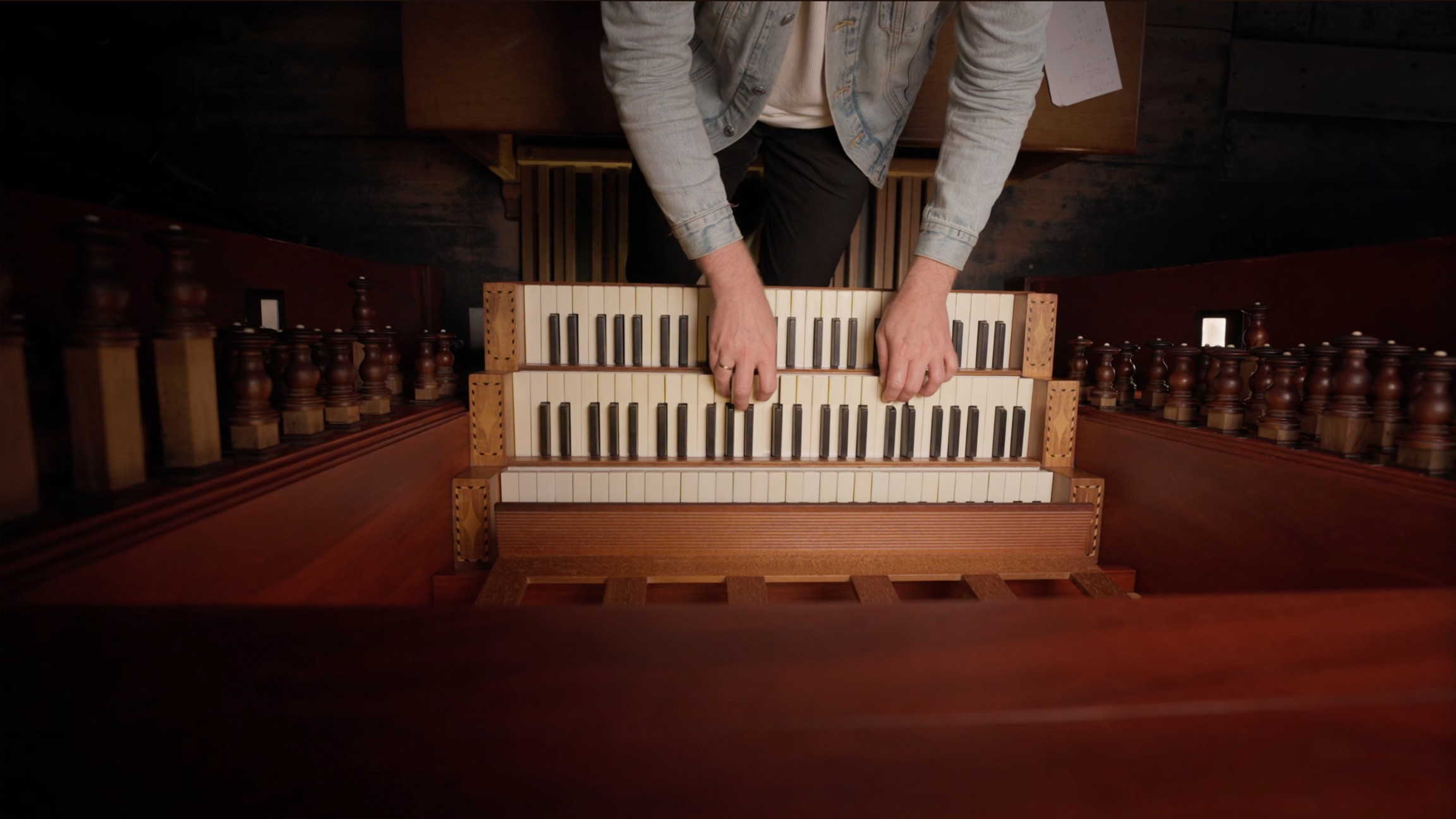
Mit Fried und Freud ich fahr dahin
BWV 616 performed by Matthias Havinga
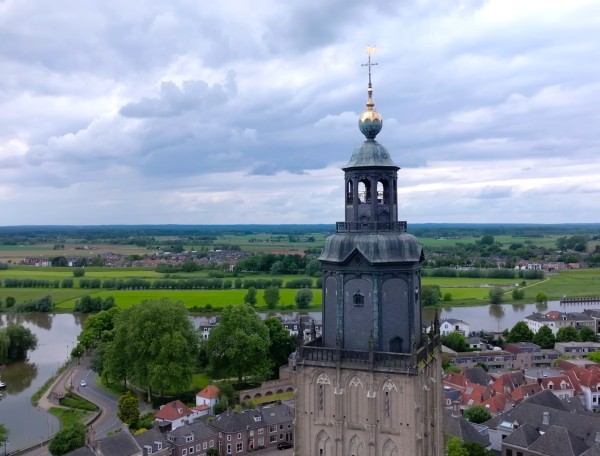
Walburgiskerk, Zutphen
Behind the music
Story
Story
Extra videos
Extra videos
Credits
Credits
Turbulent water
A chorale arrangement that appears to express a historical flood disaster in music
On 29 May 1613, many hours of stormy weather in Weimar and the rest of Thuringia caused a flood disaster that went down in history. In the city alone, 44 houses were destroyed and almost a hundred people drowned. A century later, the disaster had not been forgotten at all. In 1704 and 1720, the ‘full reports’ (vollständigen Acta) of the ‘Thuringian Deluge’ were published. They included several accounts of victims going to meet their deaths while singing the chorale Mit Fried und Freud’ ich fahr dahin.
Bach must also have heard these stories and they probably influenced him when writing BWV 616: an organ arrangement of the chorale Mit Fried und Freud’ ich fahr dahin.
Everything in BWV 616 revolves around a small group of one quaver and two semiquavers. This little motif is heard more or less continuously throughout the piece. It provides a lively and – depending on the tempo chosen – even restless layer below the chorale melody. It resembles turbulent water that even submerges the chorale melody in some places. In the harmonies below the chorale melody, too, nothing is straightforward. Here and there, short but unexpected harmonic sidesteps are heard. Flood or no flood, whereas the chorale text speaks of peace and going to meet death joyfully, the music certainly does not appear to endorse that feeling.
Orgelbüchlein, BWV 599-644
During his time as court organist at Weimar (1708-1714), Bach already started compiling his first collection of chorale arrangements and chorale preludes (compositions based on Lutheran hymns). They were intended to be used in church services, and the preludes were an introduction to congregational singing. According to the list of contents in Bach’s manuscript, it was supposed to have been a collection of 164 compositions, but in the end it did not exceed 46 (BWV 599-644). The order, combined with the limited length of the pieces, indicates that Bach was planning to compile a complete cycle of chorale arrangements. Later, in his period at Köthen, he gave the collection a title page, which reads: ‘Orgel-Büchlein, Worinne einem anfahenden Organisten Anleitung gegeben wird, auff allerhand Arth einen Choral durchzuführen…’ (‘Little organ book, in which a beginner organist is taught to arrange a chorale in all sorts of ways...’). So at the time, he intended the collection just as a teaching manual, maybe to present on his application in 1722 for the post of cantor at the Thomasschule in Leipzig, which was an important teaching position. The pupils must have had a hard time of it, as the preludes contain the complete range of baroque keyboard techniques in a nutshell.
Vocal texts
Original
Translation
Credits
-
- Release date
- 22 October 2026
-
- Recording date
- 30 May 2024
-
- Location
- Walburgiskerk, Zutphen
-
- Organ
- Matthias Havinga
-
- Instrument
- Henrick Bader, 1639/1643
-
- Director and editor
- Gijs Besseling
-
- Music recording
- Guido Tichelman, Pim van der Lee
-
- Music edit and mix
- Guido Tichelman
-
- Camera
- Danny Noordanus, Manon Hoskens, Remco van Leest
-
- Grip
- Wouter Visser
-
- Assistant music recording
- Marloes Biermans
-
- Producer
- Lisanne Marlou de Kok
Help us to complete All of Bach
There are still many recordings to be made before the whole of Bach’s oeuvre is online. And we can’t complete the task without the financial support of our patrons. Please help us to complete the musical heritage of Bach, by supporting us with a donation!