Was Gott tut, das ist wohlgetan
BWV 99 performed by the Netherlands Bach Society
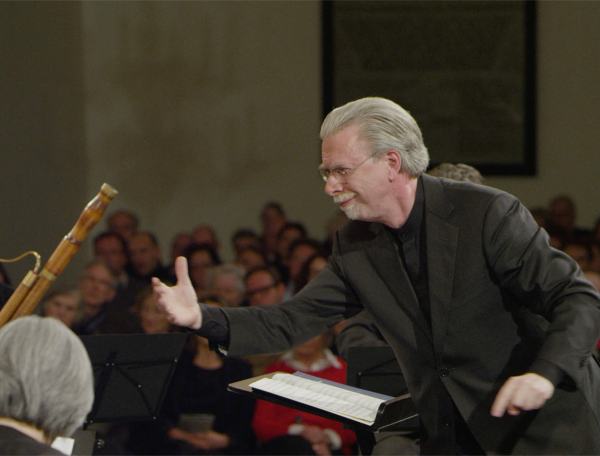
conducted by Jos van Veldhoven
Grote Kerk, Naarden
Behind the music
Story
Story
Extra videos
Extra videos
Texts
Texts
Credits
Credits
Struggle with suffering
The contrast between faith and doubt inspired Bach to create musical contrasts
This cantata originated in Bach’s second year in Leipzig. He was working at the time on a complete series of ‘chorale cantatas’, taking inspiration each week from a well-known hymn. He usually used the words of the first and last verses literally, and arranged the in-between verses to suit the sermon of the day – in this case, the Sermon on the Mount.
On a first hearing, the festive opening resembles a concerto with various solo instruments. It is only when the sopranos enter with a melody on long notes that we recognise it as church music. The mood is ecstatic, and the soprano melody towers above the introduction like a sort of motto: 'Was Gott tut, das ist wohlgetan’ (What God does is well done).
Although the high spirits continue in the closing chorale, the in-between movements are filled with hesitancy and fear, giving plenty of opportunity to create colourful musical contrasts between faith and doubt. The first recitative for bass reaffirms faith in God. But the tenor aria places quite an emphasis on the many bitter moments endured by the dying man through the unfathomable ways of God – both in the words and in the incredibly difficult passage for flute. In the second recitative, the alto announces the intention of enduring the suffering nonetheless. Then the alto and soprano reflect once again in their duet on the miserable fate that awaits those who cannot bear their cross patiently. The dispute is finally settled by an uncompromisingly positive closing chorale, which eventually tips the scale to the optimistic side.
When Bach used this chorale again less than ten years later, for cantata BWV 100, the references to suffering on this side and the other side disappeared completely. Here, he uses the chorale text literally, with no poeticising or additions. It is something that characterises much of his later work: the struggle with suffering has made way for a rock-solid faith in the consoling Father.
- BWV
- 99
- Title
- Was Gott tut, das ist wohlgetan
- Genre
- cantatas
- Year
- 1724
- City
- Leipzig
- Lyricist
- Samuel Rodigast/unknown arranger
- Occasion
- fifteenth Sunday after Trinity
- First performance
- 17 September 1724
- Special notes
- There are two other cantatas with this title, BWV 98 and BWV 100.
With support from
Eunice and Vincent Panetta
Extra videos
Vocal texts
Original
1. Chor
Was Gott tut, das ist wohlgetan,
es bleibt gerecht sein Wille;
wie er fängt meine Sachen an,
will ich ihm halten stille.
Er ist mein Gott,
der in der Not
mich wohl weiss zu erhalten;
drum lass ich ihn nur walten.
2. Rezitativ (Bass)
Sein Wort der Wahrheit stehet fest
und wird mich nicht betrügen,
weil es die Gläubigen
nicht fallen noch verderben lässt.
Ja, weil es mich den Weg zum Leben führet,
so fasst mein Herze sich und lässet sich begnügen
an Gottes Vatertreu und Huld
und hat Geduld,
wenn mich ein Unfall rühret.
Gott kann mit seinen Allmachtshänden
mein Unglück wenden.
3. Arie (Tenor)
Erschüttre dich nur nicht, verzagte Seele,
wenn dir der Kreuzeskelch so bitter schmeckt!
Gott ist dein weiser Arzt
und Wundermann,
so dir kein tödlich Gift einschenken kann,
obgleich die Süßigkeit verborgen steckt.
4. Rezitativ (Alt)
Nun, der von Ewigkeit geschloss’ne Bund
bleibt meines Glaubens Grund.
Er spricht mit Zuversicht
im Tod und Leben:
Gott ist mein Licht,
ihm will ich mich ergeben.
Und haben alle Tage
gleich ihre eigne Plage,
doch auf das überstandne Leid,
wenn man genug geweinet,
kommt endlich die Errettungszeit,
da Gottes treuer Sinn erscheinet.
5. Duett (Sopran, Alt)
Wenn des Kreuzes Bitterkeiten
mit des Fleisches Schwachheit streiten,
ist es dennoch wohlgetan.
Wer das Kreuz durch falschen Wahn
sich vor unerträglich schätzet,
wird auch künftig nicht ergötzet.
6. Choral
Was Gott tut, das ist wohlgetan,
dabei will ich verbleiben.
Es mag mich auf die rauhe Bahn
Not, Tod und Elend treiben,
so wird Gott mich
ganz väterlich
in seinen Armen halten;
drum lass ich ihn nur walten.
Translation
1. Chorus
What God doth, is well done,
His will is just and lasts forever;
however He acts on my behalf
I shall stand by Him calmly.
He is my God,
who sustains me
when I am in distress;
that is why I let Him prevail.
2. Recitative (Bass)
His word of truth stands secure
and shall not deceive me,
for it lets the faithful
neither fall nor perish.
Yea, since it leads me on the path to life,
my heart grows calm and contents itself
with God’s paternal faith and grace
and is patient
when disaster strikes.
God can with His almighty hands
avert my misfortune.
3. Aria (Tenor)
Be not upset, disheartened soul,
if the cross’s cup tastes so bitter!
God is your wise physician
and works wonders,
who can pour no fatal poison for you,
even though its sweetness lies concealed.
4. Recitative (Alto)
Now, the eternally contracted covenant
remains the base of my belief.
It says with confidence
in death and life:
God is my light,
I shall devote myself to Him.
And though each day
has its own torment,
when the pain has been endured,
when we have wept enough,
the day of salvation comes at last,
when God’s true will appears.
5. Duet (Soprano, Alto)
When the bitter sorrows of the cross
struggle with the flesh’s weakness,
it is, notwithstanding, well done.
He who, through false delusion,
considers the cross too heavy to be borne,
will have no pleasure in times to come.
6. Chorale
What God doth, is well done;
to this I shall be constant.
Though I be cast onto the rough road
by affliction, death and misery,
God shall uphold me
just like a father
in His arms;
that is why I let Him prevail.
Credits
-
- Release date
- 4 September 2015
-
- Recording date
- 7 February 2015
-
- Location
- Grote Kerk, Naarden
-
- Conductor
- Jos van Veldhoven
-
- Soprano
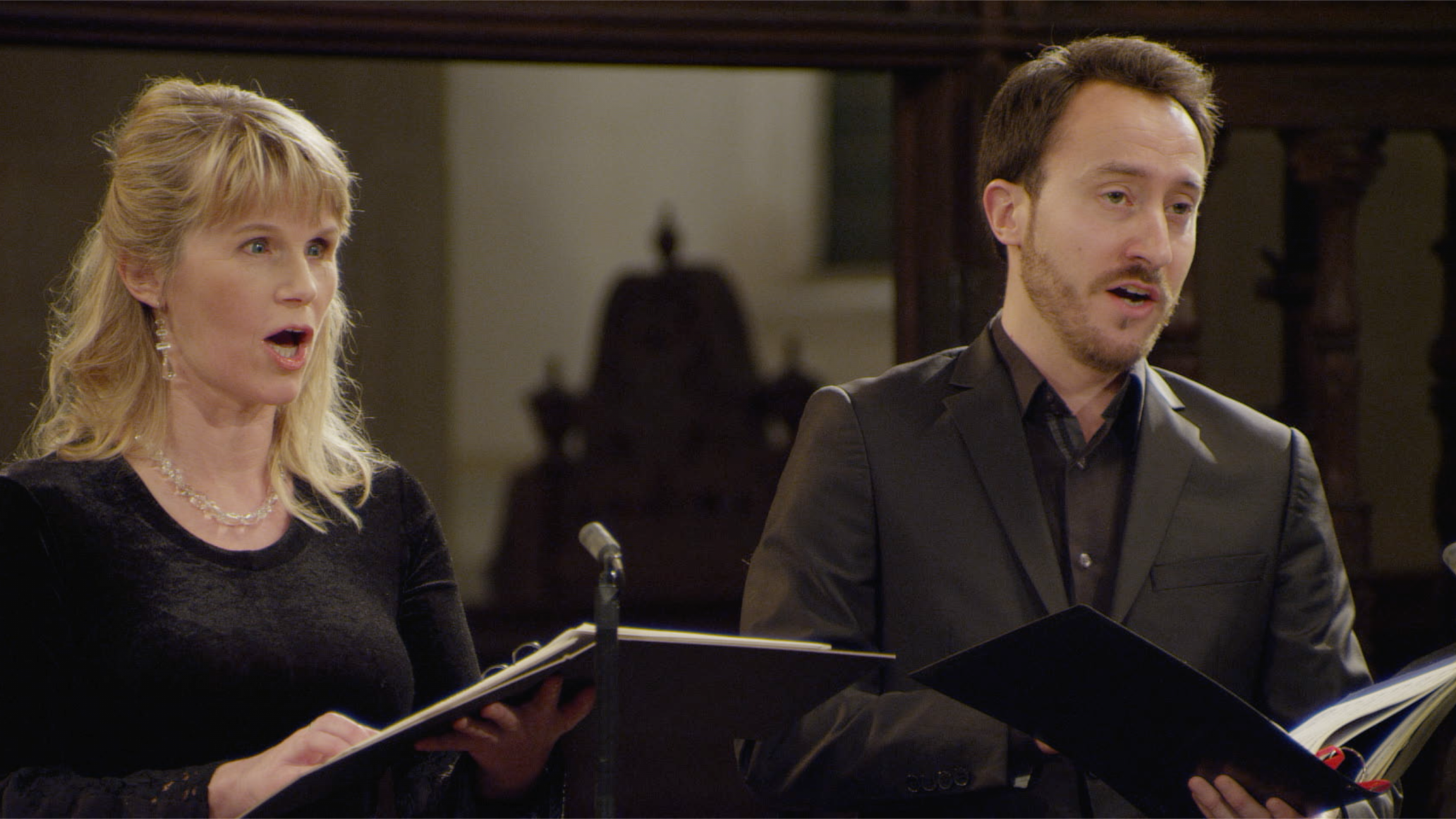
- Gerlinde Sämann
-
- Alto
- Damien Guillon
-
- Tenor
- Charles Daniels
-
- Bass
- Peter Kooij
-
- Ripieno soprano
- Marjon Strijk, Hilde Van Ruymbeke
-
- Ripieno alto
- Elsbeth Gerritsen, Barnabás Hegyi
-
- Ripieno tenor
- Kevin Skelton, Endrik Üksvärav
-
- Ripieno bass
- Michiel Meijer, Drew Santini
-
- Violin 1
- Sayuri Yamagata, Pieter Affourtit, Hanneke Wierenga
-
- Violin 2
- Anneke van Haaften, Paulien Kostense, Lidewij van der Voort
-
- Viola
- Staas Swierstra, Jan Willem Vis
-
- Cello
- Lucia Swarts, Richte van der Meer
-
- Double bass
- Maggie Urquhart
-
- Traverso
- Marten Root
-
- Oboe
- Martin Stadler
-
- Bassoon
- Yukiko Murakami
-
- Horn
- Erwin Wieringa
-
- Harpsichord
- Siebe Henstra
-
- Positive organ
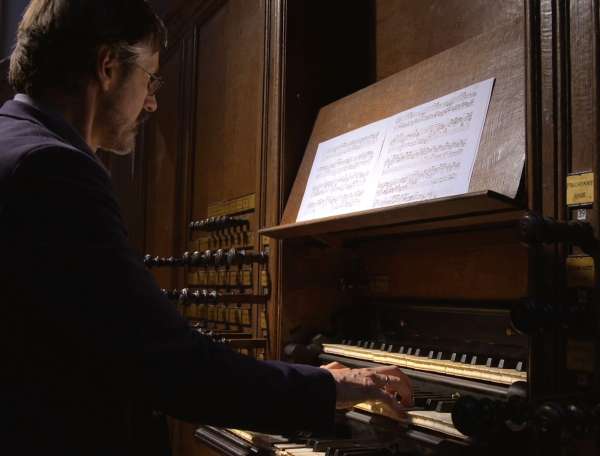
- Leo van Doeselaar
-
- Film director and editor
- Lucas van Woerkum
-
- Music recording producers
- Guido Tichelman, Bastiaan Kuijt, Micha de Kanter
-
- Music editor
- Guido Tichelman
-
- Camera
- Jorrit Garretsen, Ruben van den Broeke, Diderik Evers, Maarten van Rossem
-
- Gaffer
- Zen Bloot, Harm Bredero, Marcel Brugman
-
- Score reader
- Stijn Berkouwer
-
- Data handler
- Wesley Westerhuis
-
- Interviews
- Onno van Ameijde
-
- Producer concert
- Marco Meijdam, Erik van Lith
-
- Producer film
- JeanMarc van Sambeek, Jessie Verbrugh
-
- Acknowledgements
- Angela Mast, Marlo Reeders
-
- With support from
- Eunice and Vincent Panetta, in loving memory of Barbara Wolff
Discover

Help us to complete All of Bach
There are still many recordings to be made before the whole of Bach’s oeuvre is online. And we can’t complete the task without the financial support of our patrons. Please help us to complete the musical heritage of Bach, by supporting us with a donation!