Applicatio in C major
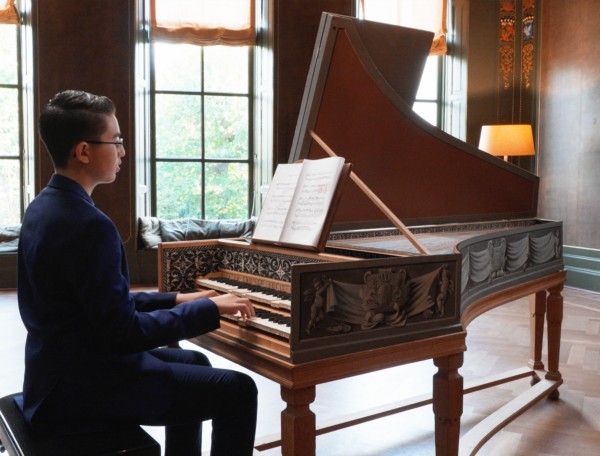
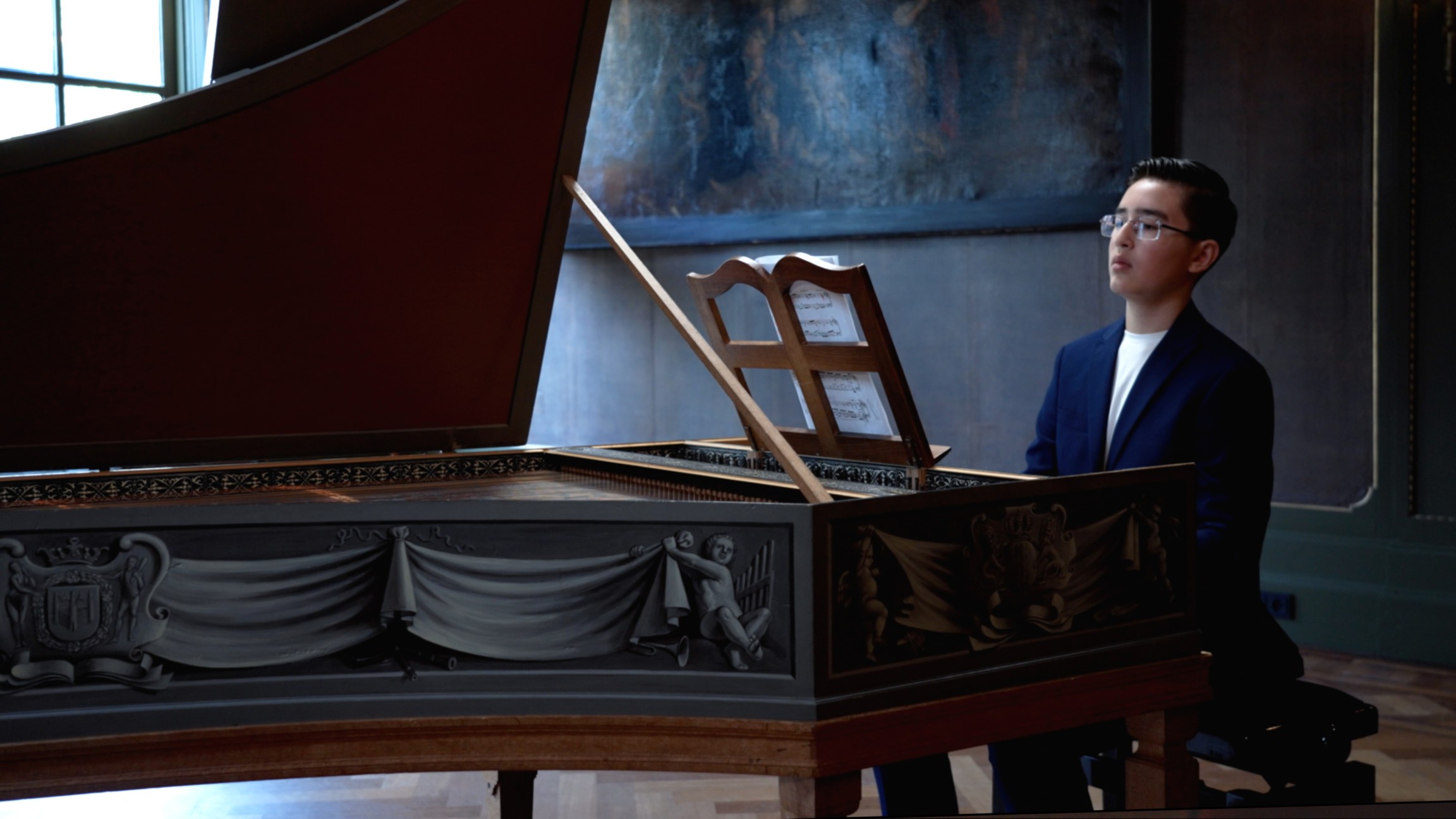
BWV 994 performed by Fernando Lourens
Maltezerhuis, Utrecht
Behind the music
Story
Story
Extra videos
Extra videos
Credits
Credits
Good fingers, bad fingers
Practice material on a miniature scale
For the Baroque keyboard, each finger has a clear job description: the longer, more powerful fingers play the metrically strong notes, and the other fingers play the weaker ones. This natural articulation creates a sort of micro-dynamism between notes with greater or lesser weight. The technique is known as ‘paired’ fingering, whereby the musician plays runs not with five fingers in succession, but with two fingers at a time, i.e. in pairs.
Which fingers were regarded as powerful was a question of interpretation, and towards the second half of the seventeenth century, this principle anyway started to blur a bit in Germany. However, Bach’s Applicatio in C major at the beginning of Wilhelm Friedemann’s Klavierbuchlein shows that paired fingering was certainly still in use. We know this thanks to the rare, carefully notated numbers in Bach’s hand on the sheet music for this Applicatio. Only the prelude BWV 930 comes anywhere near it with regard to level of detail.
The Applicatio prescribes the third and fourth finger (the middle and ring finger) in ascending runs for the right hand. Descending scales are played with the third and second finger (forefinger). The left has to ascend with the forefinger and thumb. In this way, the hands skip over the keyboard, with the essential ornaments subtly interwoven through the lines.
Our modern solution of playing clean lines – by crossing over the thumb – was seldom used by Bach. This was a conscious decision, as our smooth legato actually sounded rather muddy to Baroque ears. Even the following generation, the more modern Carl Philipp Emanuel and Wilhelm Friedemann Bach, regularly used paired fingering, precisely for that articulation effect.
This Applicatio has only eight bars. But even on this miniature scale, the music is still Bach through and through. And the piece gave his son Wilhelm Friedemann the chance to practice set musical patterns. Well on the way to the bigger works!
Young talent
Once every two or three years, the Netherlands Bach Society organises a talent development project for gifted young musicians under the age of 18. The projects, which focus on the performance practice of Bach’s music, allows us to bring talented youngsters into contact with historical performance practice and give them deeper insight into Bach’s music. In this project, we worked with keyboardists of the future. Seven very talented international youngsters between twelve and eighteen years old were selected from auditions to take two masterclasses about Bach, the harpsichord and baroque playing techniques and styles, given by Siebe Henstra. Each keyboardist rehearsed movements from the Klavierbüchlein für Wilhelm Friedemann Bach, including the Nine Little Preludes, BWV 924-932, which Bach wrote to use in lessons with his son Wilhelm Friedemann. The rehearsed works were recorded for All of Bach in October 2024, at the Maltezerhuis in Utrecht.
Extra videos
Vocal texts
Original
Translation
Credits
-
- Release date
- 17 September 2026
-
- Recording date
- 16 October 2024
-
- Location
- Maltezerhuis, Utrecht
-
- Harpsichord
- Fernando Lourens
-
- Instrument
- Titus Crijnen, 1992 after Johannes Ruckers, 1638
-
- Director and camera
- Robin van Erven Dorens
-
- Music recording
- Guido Tichelman, Pim van der Lee
-
- Music recording, edit and mix
- Guido Tichelman
-
- Camera
- Martijn van Beenen
-
- Lights
- Ernst-Jan Thieme
-
- Data handling
- Brechtje van Riel
-
- Assistant music recording
- Marloes Biermans
-
- Producer
- Lisanne Marlou de Kok
Help us to complete All of Bach
There are still many recordings to be made before the whole of Bach’s oeuvre is online. And we can’t complete the task without the financial support of our patrons. Please help us to complete the musical heritage of Bach, by supporting us with a donation!